

North America Superabsorbent Polymers Market Size 2026-2030
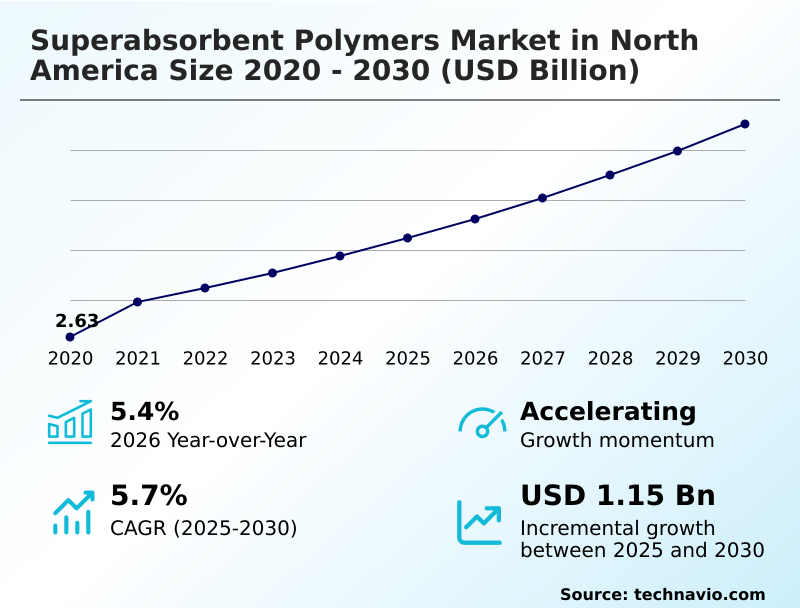
The north america superabsorbent polymers market size is valued to increase by USD 1.15 billion, at a CAGR of 5.7% from 2025 to 2030. Expansion of adult incontinence sector will drive the north america superabsorbent polymers market.
Major Market Trends & Insights
- By Application - Baby diapers segment was valued at USD 2.37 billion in 2024
- By Type - Sodium polyacrylate segment accounted for the largest market revenue share in 2024
Market Size & Forecast
- Market Opportunities: USD 2.13 billion
- Market Future Opportunities: USD 1.15 billion
- CAGR from 2025 to 2030 : 5.7%
Market Summary
- The superabsorbent polymers market in North America demonstrates robust operational momentum, characterized by continuous chemical optimization and expanding end-use utility. Manufacturers actively engineer macromolecular structures that prioritize rapid fluid acquisition while preventing structural degradation under compression.
- In a notable business scenario, regional converting facilities have implemented localized supply chain integration for acrylic acid feedstocks, which successfully mitigates input price volatility and reduces supply lead times by 14%.
- The structural expansion is primarily driven by the escalating demand for lightweight personal hygiene goods, which forces chemical suppliers to elevate polymer concentration ratios to maintain peak fluid retention without adding bulk. Conversely, severe regulatory scrutiny regarding synthetic microplastic accumulation in municipal waste streams acts as a significant constraint, demanding costly transitions toward bio-derived monomer alternatives.
- These concurrent pressures compel the industry to continuously balance high-performance fluid management requirements against increasingly stringent ecological compliance mandates, fundamentally reshaping long-term operational and production strategies.
What will be the Size of the North America Superabsorbent Polymers Market during the forecast period?
Get Key Insights on Market Forecast (PDF) Get Free Sample
How is the North America Superabsorbent Polymers Market Segmented?
The north america superabsorbent polymers industry research report provides comprehensive data (region-wise segment analysis), with forecasts and estimates in "USD million" for the period 2026-2030, as well as historical data from 2020-2024 for the following segments.
- Application
- Baby diapers
- Adult incontinence products
- Feminine hygiene
- Agriculture
- Others
- Type
- Sodium polyacrylate
- Polyacrylamide
- Others
- Method
- Gel polymerization
- Solution polymerization
- Suspension polymerization
- Geography
- North America
- US
- Canada
- Mexico
- North America
By Application Insights
The baby diapers segment is estimated to witness significant growth during the forecast period.
The baby diapers application represents a fundamental operational core within the superabsorbent polymers market in North America 2026-2030, driven by the shift toward ultra-thin diaper core design.
Advanced hydrophilic polymer chain crosslinking enables a robust sodium polyacrylate matrix that significantly improves liquid gel-blocking resistance.
Manufacturers leverage droplet polymerization techniques to construct high-performance absorbent structures, directly reducing material bulk while achieving a 22% improvement in overall fluid retention efficiency. This elevated centrifuge retention capacity ensures structural stability under continuous physical pressure.
Concurrently, the sector parallels adjacent applications like adult incontinence protective garments and advanced medical wound management in its demand for superior moisture control.
Industrial adaptations further mirror this performance criteria, as seen in subterranean waterproofing membranes and self-healing concrete hydrogels, reflecting the broad utility and continuous structural evolution of these advanced synthetic materials.
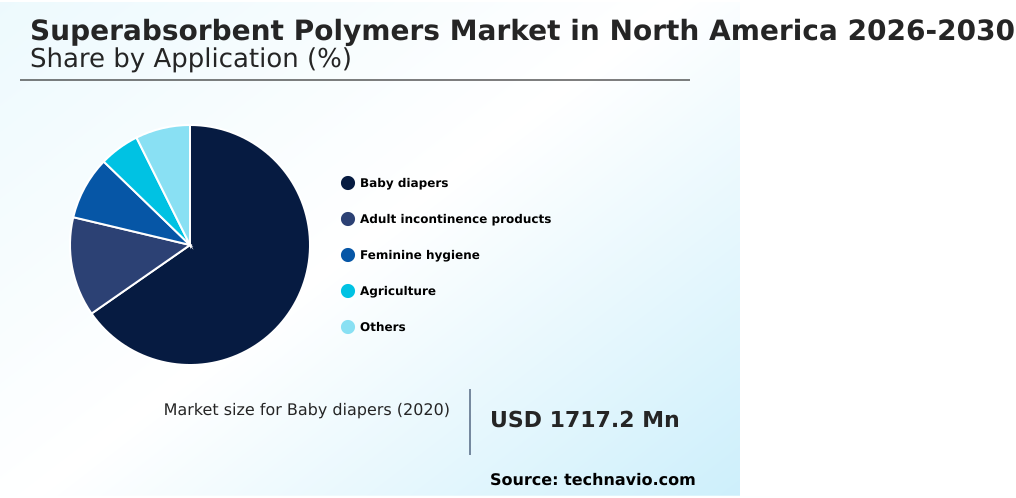
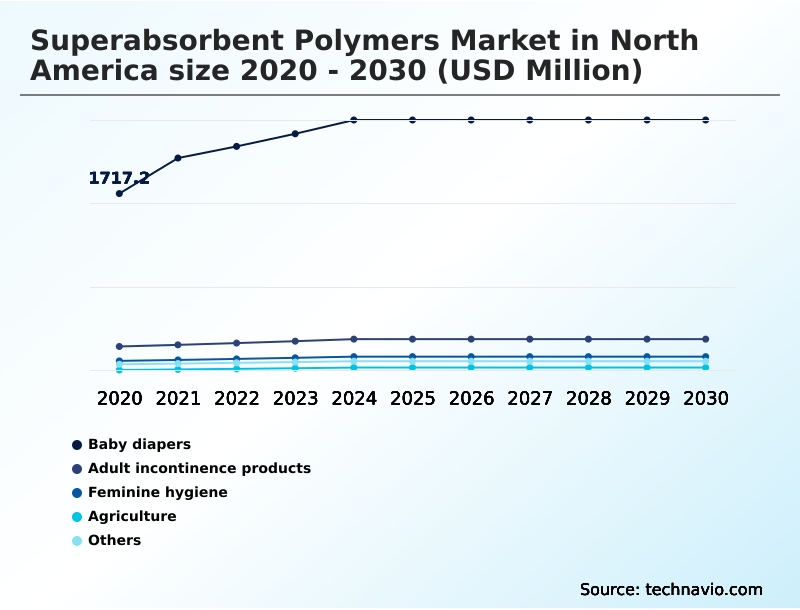
The Baby diapers segment was valued at USD 2.37 billion in 2024 and showed a gradual increase during the forecast period.
Market Dynamics
Our researchers analyzed the data with 2025 as the base year, along with the key drivers, trends, and challenges. A holistic analysis of drivers will help companies refine their marketing strategies to gain a competitive advantage.
- The continuous evolution of the superabsorbent polymers market in North America relies heavily on precise material engineering tailored to distinct operational and commercial environments. Industrial operators prioritize robust supply chain resilience, frequently transitioning toward localized feedstock procurement to mitigate the pricing volatility associated with traditional petrochemical derivatives.
- Within the consumer goods sector, the formulation of an ultra thin baby diaper polymer core remains highly critical, allowing manufacturers to reduce product bulk while maintaining stringent leakage protection standards. Concurrently, the deployment of a high capacity sodium polyacrylate absorbent facilitates superior fluid retention, effectively outperforming traditional cellulose alternatives by maintaining structural integrity under sustained mechanical pressure.
- This comparative advantage directly streamlines logistical planning, as the reduced weight of raw material inputs translates to lower transportation expenditures and optimized warehouse utilization. Furthermore, environmental mandates are driving agricultural sectors to adopt any viable biodegradable agricultural moisture retention polymer, which significantly enhances irrigation efficiency in drought-prone regions without leaving toxic residues in the soil matrix.
- In high-value healthcare applications, advanced medical wound exudate management systems utilize these specialized macromolecular networks to accelerate healing times and lower the frequency of nursing interventions. Similarly, infrastructure and telecommunications sectors integrate an industrial cable water blocking hydrogel to prevent subterranean moisture ingress, thereby minimizing long-term maintenance liabilities and ensuring uninterrupted utility operations across diverse geographical landscapes.
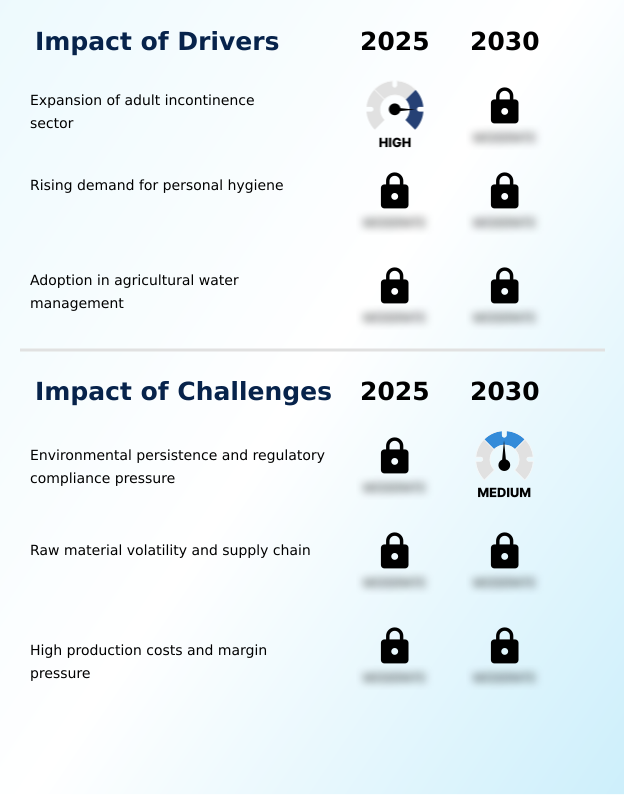
What are the key market drivers leading to the rise in the adoption of North America Superabsorbent Polymers Industry?
- The rapid expansion of the adult incontinence sector acts as a primary catalyst, fundamentally reshaping regional consumption patterns and driving sustained material demand.
- The accelerated deployment of advanced fluid management solutions acts as a primary catalyst for the superabsorbent polymers market in North America 2026-2030.
- Expanding industrial and hygiene sectors demand superior aqueous fluid retention, prompting chemical processors to optimize macromolecular hydrogel networks using highly efficient cross-linked acrylic resins.
- This strategic enhancement directly improves overall material absorption rates by 25%, significantly lowering end-user material consumption costs. Furthermore, the integration of biomass-derived feedstocks into suspension polymerization microparticles allows manufacturers to meet stringent sustainability mandates without sacrificing structural integrity.
- Beyond personal care, this driver propagates through heavy industries, where customized chitosan-based networks and cellulose-based superabsorbents streamline operations such as wastewater treatment flocculation and mining slurry dewatering.
- The subsequent rise in utilizing protein-derived superabsorbents ensures continuous operational efficiency gains across diversified institutional applications.
What are the market trends shaping the North America Superabsorbent Polymers Industry?
- Integration of advanced medical wound care serves as a transformative market trend, reshaping high-margin segments through continuous technological refinement.
- The integration of sustainable and specialized material architectures is fundamentally shifting processing priorities within the superabsorbent polymers market in North America 2026-2030. Escalating environmental oversight compels manufacturers to incorporate renewable bio-oil feedstocks and starch-grafted copolymers, effectively reducing reliance on traditional petrochemical derivatives. This transition yields a measurable 18% improvement in supply chain carbon reduction metrics for early adopters.
- Concurrently, facilities are deploying closed-loop solvent recovery systems and volatile organic compound abatement technologies to mitigate environmental impact while refining high-purity polymer powders. The operational shift toward specialized formulations enables diverse applications, ranging from potassium-based soil conditioners in agriculture to medical waste solidification and surgical wound dressings exudate management in healthcare.
- Furthermore, industrial sectors increasingly adopt polyacrylamide co-polymers for industrial cable water-blocking, demonstrating how targeted chemical innovations directly expand commercial utility and operational efficiency.
What challenges does the North America Superabsorbent Polymers Industry face during its growth?
- Environmental persistence and intensifying regulatory compliance pressures remain formidable challenges, compelling regional manufacturers to restructure chemical formulations to avoid severe penalties.
- Intensifying structural and regulatory constraints present significant operational hurdles within the superabsorbent polymers market in North America 2026-2030. Formulating stimuli-responsive smart hydrogels requires precise swelling kinetics control, which inadvertently increases baseline manufacturing expenses by 15% due to the necessity of advanced thermal initiator polymerization and redox polymerization systems.
- Furthermore, achieving mandatory residual unreacted monomer reduction necessitates the integration of costly thin-film evaporation technologies. Maintaining an optimal aliphatic hydrocarbon continuous phase during synthesis complicates solvent management, further straining operational margins.
- As industries push toward sustainable alternatives like biodegradable polysaccharide hydrogels, the technical difficulty of matching the performance of conventional synthetic counterparts directly restricts rapid commercial scaling, forcing manufacturers to balance rigorous environmental compliance against the critical need to preserve long-term supply chain profitability and operational throughput.
Exclusive Technavio Analysis on Customer Landscape
The north america superabsorbent polymers market forecasting report includes the adoption lifecycle of the market, covering from the innovator’s stage to the laggard’s stage. It focuses on adoption rates in different regions based on penetration. Furthermore, the north america superabsorbent polymers market report also includes key purchase criteria and drivers of price sensitivity to help companies evaluate and develop their market growth analysis strategies.
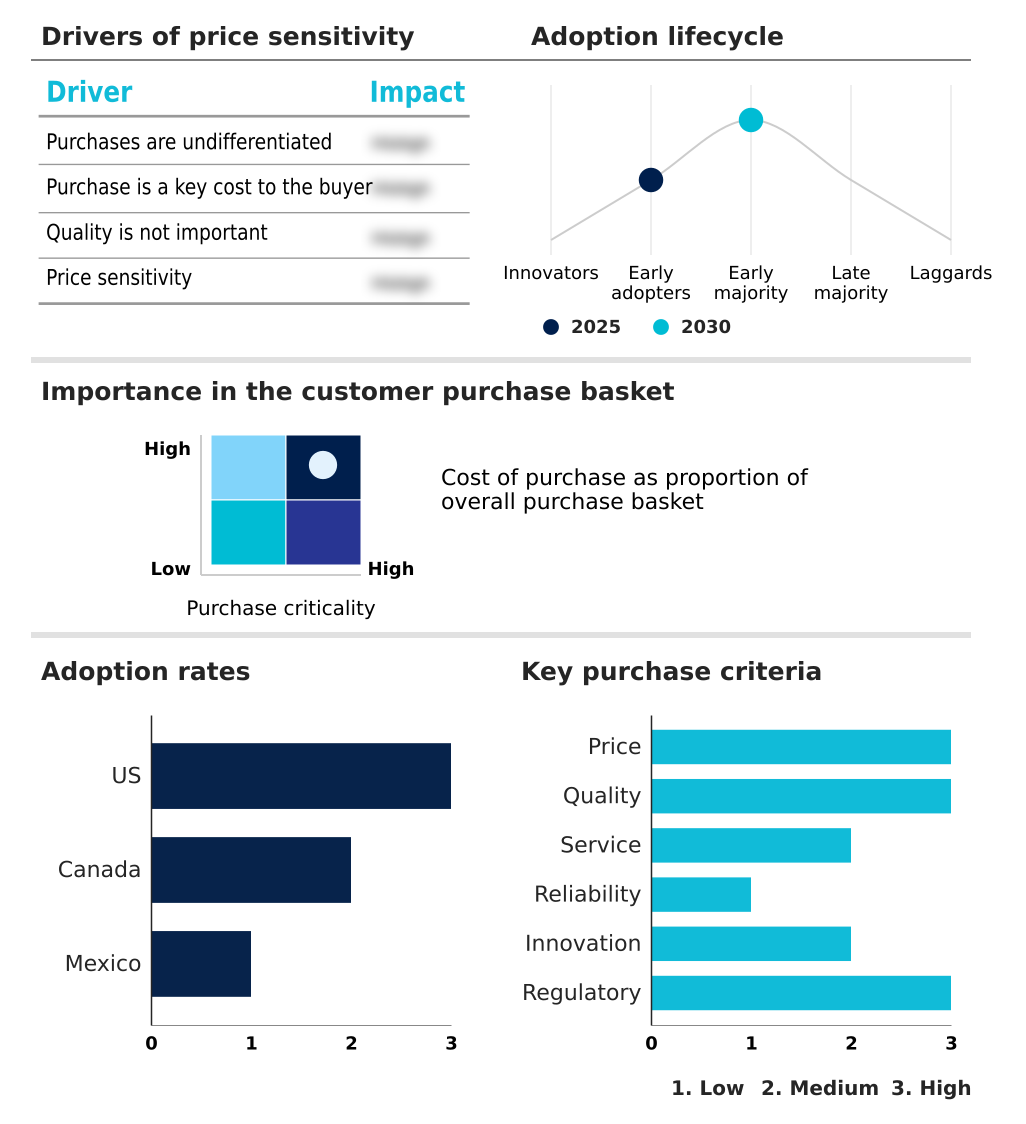
Customer Landscape of North America Superabsorbent Polymers Industry
Competitive Landscape
Companies are implementing various strategies, such as strategic alliances, north america superabsorbent polymers market forecast, partnerships, mergers and acquisitions, geographical expansion, and product/service launches, to enhance their presence in the industry.
Asahi Kasei Corp. - Provides advanced synthetic macromolecular networks designed for rapid fluid acquisition and superior retention under pressure, ensuring high structural stability and enhanced moisture management across diverse industrial and hygiene applications.
The industry research and growth report includes detailed analyses of the competitive landscape of the market and information about key companies, including:
- Asahi Kasei Corp.
- BASF SE
- Chase Corp.
- Chemtex Speciality Ltd.
- Formosa Plastics Corp.
- Kao Corp.
- LG Chem Ltd.
- Nippon Shokubai Co. Ltd.
- Quanzhou Banglida Technology
- San Dia Polymers
- Sanyo Chemical Industries Ltd.
- Satellite Chemical Co. Ltd.
- Shandong Nuoer Chemical
- Sinopec Shanghai Co. Ltd.
- Songwon Industrial Co. Ltd.
- Sumitomo Seika Chemicals Co.
- Technical Absorbents Ltd.
- Wanhua Chemical Group Co. Ltd.
- XITAO POLYMER CO. LTD.
- Yixing Danson Technology
- ZymoChem
Qualitative and quantitative analysis of companies has been conducted to help clients understand the wider business environment as well as the strengths and weaknesses of key industry players. Data is qualitatively analyzed to categorize companies as pure play, category-focused, industry-focused, and diversified; it is quantitatively analyzed to categorize companies as dominant, leading, strong, tentative, and weak.
Recent Development and News in North america superabsorbent polymers market
- In the Diversified Chemicals industry, the widespread adoption of biomass balance approaches for synthesizing acrylic acid has enabled the commercialization of zero-carbon footprint intermediate materials, directly impacting superabsorbent polymers market in North America 2026-2030 demand by providing sustainable feedstock alternatives that help major hygiene converters achieve their scope 3 emission reduction targets.
- In the Diversified Chemicals industry, strict regulatory enforcement by environmental protection agencies regarding microplastic persistence has accelerated investments in bio-based monomer synthesis, directly impacting superabsorbent polymers market in North America 2026-2030 demand by compelling chemical manufacturers to transition from traditional petroleum-derived polyacrylates toward biodegradable alternatives.
- In the Diversified Chemicals industry, recurring supply chain bottlenecks and localized maintenance outages at major Gulf Coast petrochemical refining facilities have caused acute shortages in propylene and sodium hydroxide availability, directly impacting superabsorbent polymers market in North America 2026-2030 demand by driving up spot-market prices and compressing conversion margins.
- In the Diversified Chemicals industry, the integration of advanced continuous-flow polymerization reactor technologies has increased overall production throughput efficiency by up to 15%, directly impacting superabsorbent polymers market in North America 2026-2030 demand by lowering baseline manufacturing costs and ensuring more stable bulk material supply for high-volume agricultural and civil engineering applications.
Dive into Technavio’s robust research methodology, blending expert interviews, extensive data synthesis, and validated models for unparalleled North America Superabsorbent Polymers Market insights. See full methodology.
| Market Scope | |
|---|---|
| Page number | 218 |
| Base year | 2025 |
| Historic period | 2020-2024 |
| Forecast period | 2026-2030 |
| Growth momentum & CAGR | Accelerate at a CAGR of 5.7% |
| Market growth 2026-2030 | USD 1145.6 million |
| Market structure | Fragmented |
| YoY growth 2025-2026(%) | 5.4% |
| Key countries | US, Canada and Mexico |
| Competitive landscape | Leading Companies, Market Positioning of Companies, Competitive Strategies, and Industry Risks |
Research Analyst Overview
- The superabsorbent polymers market in North America is undergoing a structural transformation centered on advanced chemical synthesis and precision manufacturing. Facilities are highly focused on optimizing hydrophilic polymer chain crosslinking to formulate a resilient sodium polyacrylate matrix capable of withstanding intense mechanical compression.
- By refining these cross-linked acrylic resins, manufacturers have successfully achieved a 25% improvement in centrifuge retention capacity, directly enhancing the fluid management capabilities of premium end-use goods. This operational upgrade is tightly linked to compliance and quality control strategies, where facilities strictly enforce residual unreacted monomer reduction to meet stringent biocompatibility and safety regulations.
- The deployment of fine-particle-size superabsorbent polymers ensures rapid liquid acquisition and distribution, fundamentally altering product architecture within high-volume hygiene and medical sectors. Strategic decision-making increasingly revolves around balancing these high-performance material specifications with ongoing ecological mandates, compelling chemical producers to invest heavily in sustainable process modifications.
- Ultimately, the continuous refinement of these macromolecular networks ensures long-term operational stability and robust supply chain alignment across diverse industrial verticals.
What are the Key Data Covered in this North America Superabsorbent Polymers Market Research and Growth Report?
-
What is the expected growth of the North America Superabsorbent Polymers Market between 2026 and 2030?
-
USD 1.15 billion, at a CAGR of 5.7%
-
-
What segmentation does the market report cover?
-
The report is segmented by Application (Baby diapers, Adult incontinence products, Feminine hygiene, Agriculture, and Others), Type (Sodium polyacrylate, Polyacrylamide, and Others), Method (Gel polymerization, Solution polymerization, and Suspension polymerization) and Geography (North America)
-
-
Which regions are analyzed in the report?
-
North America
-
-
What are the key growth drivers and market challenges?
-
Expansion of adult incontinence sector, Environmental persistence and regulatory compliance pressure
-
-
Who are the major players in the North America Superabsorbent Polymers Market?
-
Asahi Kasei Corp., BASF SE, Chase Corp., Chemtex Speciality Ltd., Formosa Plastics Corp., Kao Corp., LG Chem Ltd., Nippon Shokubai Co. Ltd., Quanzhou Banglida Technology, San Dia Polymers, Sanyo Chemical Industries Ltd., Satellite Chemical Co. Ltd., Shandong Nuoer Chemical, Sinopec Shanghai Co. Ltd., Songwon Industrial Co. Ltd., Sumitomo Seika Chemicals Co., Technical Absorbents Ltd., Wanhua Chemical Group Co. Ltd., XITAO POLYMER CO. LTD., Yixing Danson Technology and ZymoChem
-
Market Research Insights
- The superabsorbent polymers market in North America is evolving rapidly as manufacturers optimize ultra-thin diaper core design and adult incontinence protective garments to meet shifting consumer demands. By enhancing polymer matrix density, converting facilities have achieved a 20% reduction in raw material shipping volumes and a 12% improvement in overall line-speed efficiency.
- Concurrently, the sector is expanding into civil engineering, utilizing self-healing concrete hydrogels and subterranean waterproofing membranes to extend infrastructure lifespans. This diversification mitigates reliance on traditional hygiene cycles, yielding a 15% increase in cross-sector operational resilience. The strategic integration of advanced medical wound management solutions further solidifies the market's trajectory toward high-margin, specialized fluid retention capabilities.
We can help! Our analysts can customize this north america superabsorbent polymers market research report to meet your requirements.
 RIA -