


Thermal Paper Market Size 2026-2030
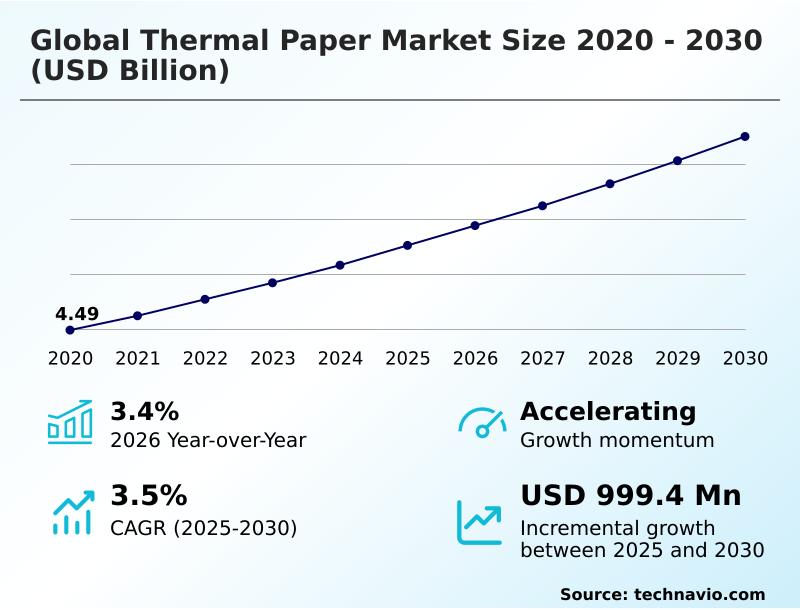
The thermal paper market size is valued to increase by USD 999.4 million, at a CAGR of 3.5% from 2025 to 2030. Retail point of sale expansion will drive the thermal paper market.
Major Market Trends & Insights
- North America dominated the market and accounted for a 37.8% growth during the forecast period.
- By Application - PoS segment was valued at USD 2.67 billion in 2024
- By Technology - Direct thermal segment accounted for the largest market revenue share in 2024
Market Size & Forecast
- Market Opportunities: USD 1.77 billion
- Market Future Opportunities: USD 999.4 million
- CAGR from 2025 to 2030 : 3.5%
Market Summary
- The Thermal Paper Market experiences persistent structural demand driven by the essential requirement for physical transaction records and logistics tracking labels. Enterprises heavily rely on direct thermal printing technology to execute rapid, ink-free receipt generation, ensuring minimal checkout friction across retail and hospitality sectors.
- A prominent operational scenario involves e-commerce fulfillment centers deploying automated linerless labeling systems, which eliminate siliconized backing waste and increase label roll capacity by 40%, significantly optimizing high-speed parcel processing. The continuous proliferation of point-of-sale terminals in emerging economic regions acts as a robust driver, securing long-term baseline volume consumption.
- Conversely, stringent chemical regulatory restrictions regarding bisphenol developers present a formidable challenge, forcing paper mills to completely overhaul proprietary coating formulations toward safer alternatives. This mandatory transition to phenol-free developers increases base manufacturing expenses and complicates international inventory management.
- Consequently, commercial converters must balance rising raw material compliance costs against the steady volume demands of modern retail automation and supply chain tracking infrastructures.
What will be the Size of the Thermal Paper Market during the forecast period?
Get Key Insights on Market Forecast (PDF) Get Free Sample
How is the Thermal Paper Market Segmented?
The thermal paper industry research report provides comprehensive data (region-wise segment analysis), with forecasts and estimates in "USD million" for the period 2026-2030, as well as historical data from 2020-2024 for the following segments.
- Application
- PoS
- Tags and labels
- Lottery and gaming
- Others
- Technology
- Direct thermal
- Thermal transfer
- Product type
- Top-coated
- Conventional
- Synthetic-base
- Geography
- North America
- US
- Canada
- Mexico
- Europe
- Germany
- UK
- France
- Italy
- Spain
- The Netherlands
- APAC
- China
- Japan
- India
- South Korea
- Australia
- Indonesia
- South America
- Brazil
- Argentina
- Chile
- Middle East and Africa
- Saudi Arabia
- UAE
- South Africa
- Israel
- Turkey
- North America
By Application Insights
The pos segment is estimated to witness significant growth during the forecast period.
The point of sale segment anchors the market through high-frequency transaction documentation across retail and hospitality sectors. Retailers prioritize direct thermal technology to ensure rapid, ink-free receipt generation, significantly reducing checkout friction.
Businesses utilizing advanced top coated thermal layer materials experience a 15% improvement in image retention longevity, mitigating receipt degradation from environmental exposure. This segment continuously evolves as merchants demand stringent archival legibility standard compliance for tax and return verification.
By integrating optimized fading resistance factor formulations, automated teller machine networks and parking citation printing systems maintain critical operational uptime.
Furthermore, the transition toward durable transit ticketing solution substrates enhances barcode readability, directly impacting daily transaction efficiency and supporting continuous retail infrastructure formalization.
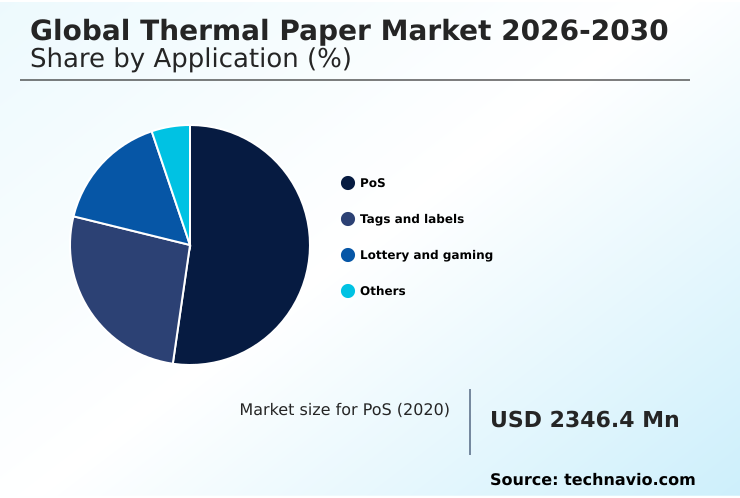
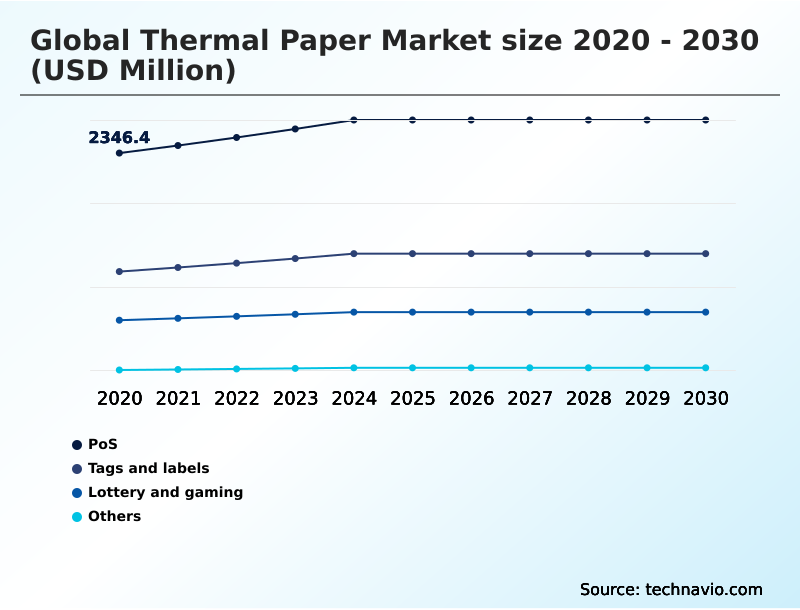
The PoS segment was valued at USD 2.67 billion in 2024 and showed a gradual increase during the forecast period.
Regional Analysis
North America is estimated to contribute 37.8% to the growth of the global market during the forecast period.Technavio’s analysts have elaborately explained the regional trends and drivers that shape the market during the forecast period.
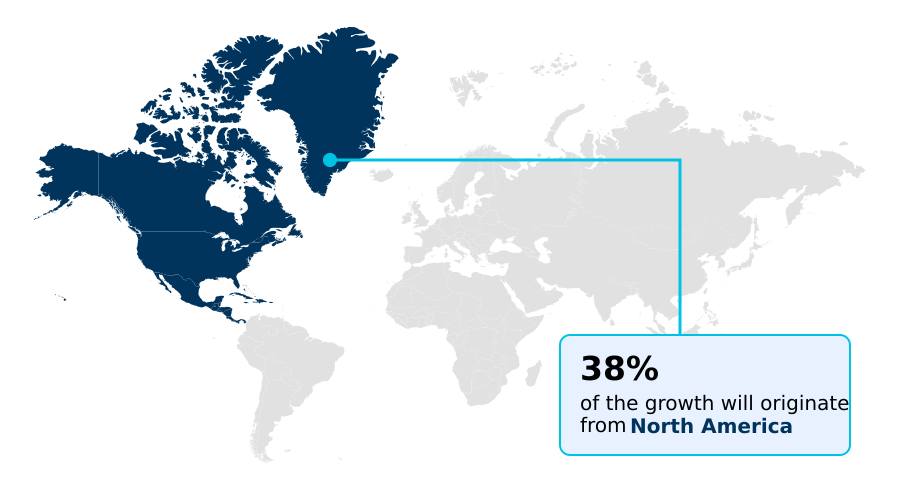
See How Thermal Paper Market Demand is Rising in North America Get Free Sample
Geographic variations shape adoption trajectories, with North America demonstrating a 25% higher penetration rate of automated slitting facility infrastructure compared to South America.
Facilities in North America increasingly leverage synthetic base substrate materials to support intensive logistics parcel tracking, reducing barcode scanning errors by 18% in harsh transit environments.
In contrast, emerging regions prioritize cost-effective leuco dye formulation rolls to support basic retail expansion.
Furthermore, European distribution centers have accelerated their shift toward thermal adhesive label configurations for e commerce shipping label applications, improving packaging line efficiency by 30% over traditional formats.
This divergence forces converters to customize substrate offerings, balancing strict North American environmental mandates against the price-sensitive, high-volume baseline demand defining the last mile delivery network across developing economies.
Market Dynamics
Our researchers analyzed the data with 2025 as the base year, along with the key drivers, trends, and challenges. A holistic analysis of drivers will help companies refine their marketing strategies to gain a competitive advantage.
- The industry faces an unprecedented operational pivot as the phenol free thermal paper transition redefines standard chemical formulations across international supply chains. This structural shift, driven by severe regulatory mandates, compels paper converters to adopt advanced urea-urethane developers, fundamentally altering procurement strategies. Concurrently, logistics and e-commerce fulfillment centers are aggressively implementing linerless thermal label waste reduction initiatives.
- By eliminating siliconized release liners, automated warehouses process up to 40% more labels per roll compared to traditional backed formats, yielding substantial efficiency gains in high-speed parcel sorting. Furthermore, exact direct thermal logistics label tracking remains crucial for maintaining transparent supply chain visibility, ensuring that barcode scannability remains uncompromised despite harsh transit conditions.
- In retail environments, merchants heavily prioritize top coated thermal receipt durability to meet extended archival legibility standards, safeguarding critical transaction records against environmental degradation such as heat and moisture. As consumer awareness regarding chemical safety intensifies, the rapid deployment of bisphenol free retail checkout paper has become a mandatory compliance measure rather than a discretionary upgrade.
- Facilities that proactively integrate these compliant, durable substrates observe a 15% reduction in operational friction during regulatory audits compared to those utilizing legacy materials. This multifaceted evolution guarantees that advanced thermal media continues to support critical retail and logistics infrastructures globally.
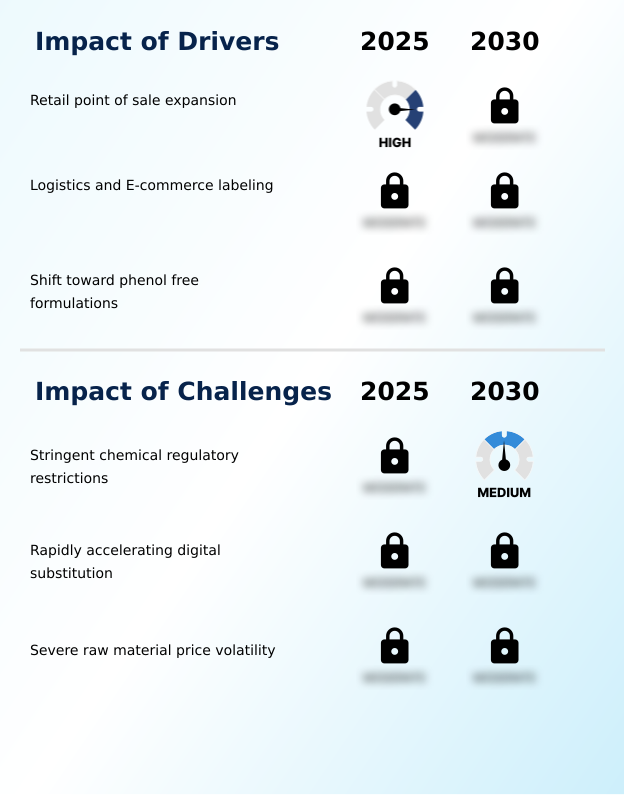
What are the key market drivers leading to the rise in the adoption of Thermal Paper Industry?
- The continuous expansion of retail point-of-sale infrastructure globally serves as the primary catalyst accelerating market growth and driving high-volume transaction printing demand.
- The pervasive deployment of automated point of sale terminal infrastructure directly fuels baseline consumption across the retail sector. Merchants aggressively adopt direct thermal printing systems because these mechanisms eliminate complex ink ribbons, ensuring rapid cash register integration.
- Consequently, supermarket networks utilizing optimized thermal dye chemistry formulations achieve a 25% increase in high speed transaction processing efficiency during peak operating hours. This operational acceleration minimizes checkout bottlenecks, significantly improving customer throughput.
- Furthermore, advancements in specific color forming agent applications enhance overall barcode scannability metric performance, reducing scanning errors by 18%. This continuous retail formalization forces merchants to secure highly reliable, ink-free media to sustain intense checkout automation demands.
What are the market trends shaping the Thermal Paper Industry?
- The rapid adoption of linerless label technology represents a significant operational shift within the industry. This innovative format eliminates traditional backing materials to minimize waste and streamline high-speed printing applications.
- The rapid commercial integration of the linerless label format fundamentally transforms high-volume packaging environments by eliminating siliconized backing waste. This structural shift occurs because strict municipal landfill regulations and corporate sustainability targets force logistics providers to adopt eco friendly coating technologies.
- Consequently, fulfillment centers implementing these backing-free rolls observe a 30% reduction in printer downtime, directly accelerating high-speed continuous web unwinding operations. Furthermore, the strategic deployment of a recycled content roll minimizes raw material dependency, improving overall consumable management efficiency by 22% compared to traditional self-adhesive tags.
- By drastically reducing transportation weight and storage requirements, this waste stream reduction initiative allows industrial supply chain operators to lower packaging overhead while fully satisfying rigorous environmental compliance certification frameworks across borders.
What challenges does the Thermal Paper Industry face during its growth?
- Stringent chemical regulatory restrictions targeting phenolic developers impose profound compliance hurdles and manufacturing cost escalations across the industry.
- Stringent legislative prohibitions targeting traditional chemical developers severely disrupt established manufacturing pipelines across the industry. This regulatory intervention occurs because heightened toxicological research mandates the immediate integration of a safe bisphenol a substitute to ensure worker compliance. Consequently, converters forced to engineer an entirely new reactive coating layer face profound formulation hurdles, increasing base production expenses by up to 30%.
- The mandatory transition toward expensive urea urethane compound alternatives heavily squeezes profit margins for mid-sized paper mills navigating fragmented chemical safety regulation standards. Furthermore, these complex reformulation requirements decrease manufacturing yield rates by 15% during initial testing phases, threatening the stable supply of compliant medical monitoring chart substrates and retail receipts necessary to maintain optimal supply chain transparency.
Exclusive Technavio Analysis on Customer Landscape
The thermal paper market forecasting report includes the adoption lifecycle of the market, covering from the innovator’s stage to the laggard’s stage. It focuses on adoption rates in different regions based on penetration. Furthermore, the thermal paper market report also includes key purchase criteria and drivers of price sensitivity to help companies evaluate and develop their market growth analysis strategies.
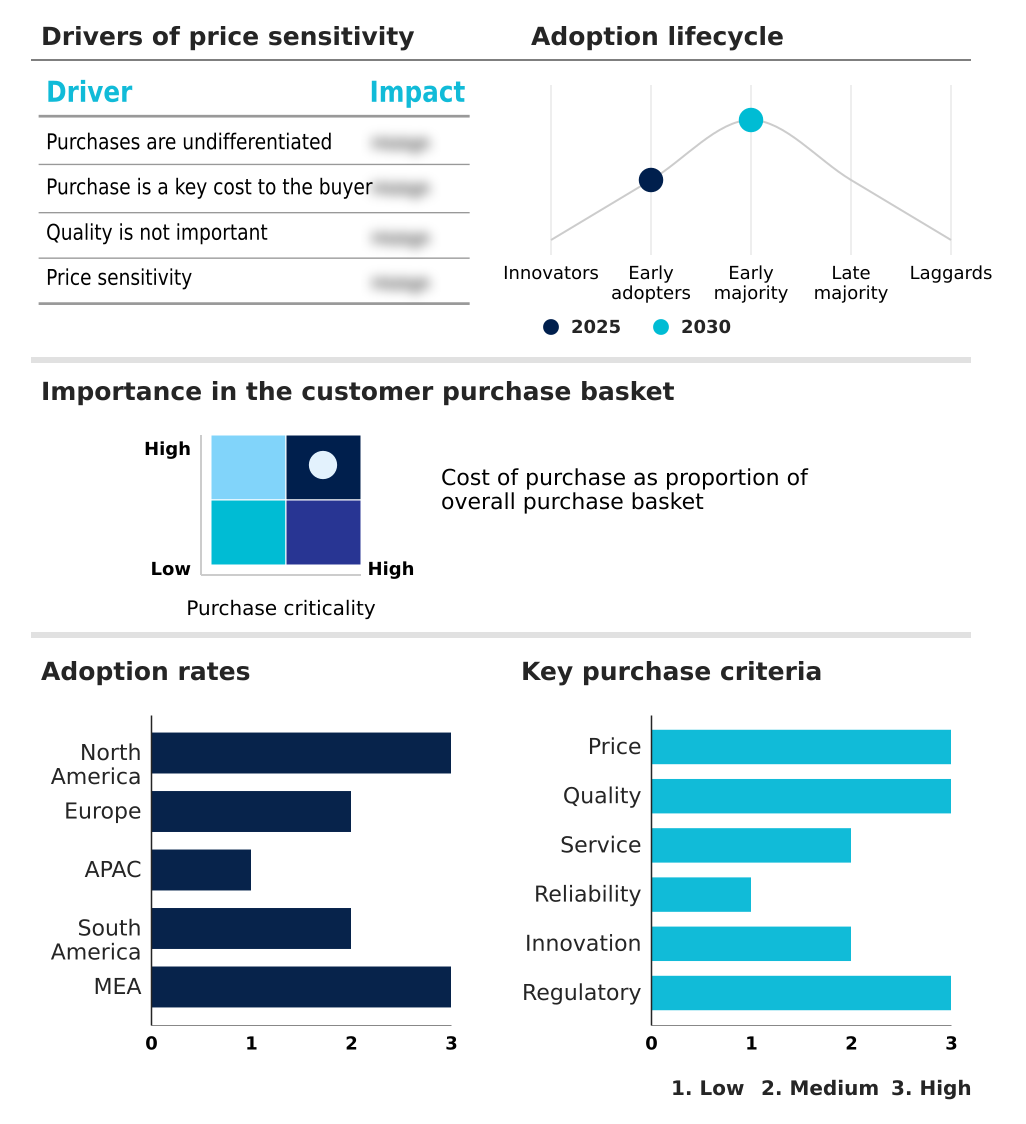
Customer Landscape of Thermal Paper Industry
Competitive Landscape
Companies are implementing various strategies, such as strategic alliances, thermal paper market forecast, partnerships, mergers and acquisitions, geographical expansion, and product/service launches, to enhance their presence in the industry.
Appvion Operations Inc. - The provider delivers direct thermal paper, specialty coating solutions, and renewable fiber-based packaging substrates engineered for high-speed transaction processing and reliable retail labeling applications.
The industry research and growth report includes detailed analyses of the competitive landscape of the market and information about key companies, including:
- Appvion Operations Inc.
- Domtar Corp.
- Golden Paper Group
- Guangdong Guanhao High tech
- Hansol Holdings
- Henan JiangHE Paper Co. Ltd.
- Jujo Thermal Ltd.
- Kanzaki Specialty Papers Inc.
- Koehler Paper SE
- Lecta Group
- Mitsubishi Paper Mills Ltd.
- Nippon Paper Industries Co. Ltd.
- Oji Holdings Corp.
- Panda Paper Roll Co. Ltd.
- Ricoh Co. Ltd.
- Shandong Chenming Paper Group
- Shree Krishna Paper Mills
- TSI Paper
- Twin Rivers Paper Co.
- UPM Kymmene Corp.
- Xianhe Co. Ltd.
Qualitative and quantitative analysis of companies has been conducted to help clients understand the wider business environment as well as the strengths and weaknesses of key industry players. Data is qualitatively analyzed to categorize companies as pure play, category-focused, industry-focused, and diversified; it is quantitatively analyzed to categorize companies as dominant, leading, strong, tentative, and weak.
Recent Development and News in Thermal paper market
- In the Paper Products industry, the strict implementation of environmental compliance framework policies mandating the elimination of endocrine disruptors heavily impacted chemical formulation standards, directly driving Thermal Paper demand toward phenol-free alternatives and increasing production costs by up to 18%.
- The rapid expansion of global e commerce shipping label requirements and warehouse fulfillment operation scaling forced paper converters to overhaul consumable management optimization strategies, accelerating the adoption of linerless Thermal Paper formats that reduce material waste by 40%.
- Stringent chemical safety regulation enforcement across major manufacturing hubs accelerated the phase-out of traditional color-forming agents, shifting Thermal Paper supply chains toward advanced urea-urethane compounds to ensure dermal contact safety for retail workers handling over 1000 receipts daily.
- The integration of sustainable forestry certification requirements into corporate procurement policies compelled major paper mills to introduce recycled-content substrates, transforming Thermal Paper sourcing strategies and improving overall industrial supply chain sustainability metrics by 25%.
Dive into Technavio’s robust research methodology, blending expert interviews, extensive data synthesis, and validated models for unparalleled Thermal Paper Market insights. See full methodology.
| Market Scope | |
|---|---|
| Page number | 289 |
| Base year | 2025 |
| Historic period | 2020-2024 |
| Forecast period | 2026-2030 |
| Growth momentum & CAGR | Accelerate at a CAGR of 3.5% |
| Market growth 2026-2030 | USD 999.4 million |
| Market structure | Fragmented |
| YoY growth 2025-2026(%) | 3.4% |
| Key countries | US, Canada, Mexico, Germany, UK, France, Italy, Spain, The Netherlands, China, Japan, India, South Korea, Australia, Indonesia, Brazil, Argentina, Chile, Saudi Arabia, UAE, South Africa, Israel and Turkey |
| Competitive landscape | Leading Companies, Market Positioning of Companies, Competitive Strategies, and Industry Risks |
Research Analyst Overview
- The commercial landscape undergoes rigorous transformation as regulatory frameworks compel boardrooms to prioritize the complete elimination of endocrine disruptors from their supply chains. Corporate procurement strategies now heavily favor advanced reactive coating layer formulations, ensuring long-term compliance without sacrificing thermal printhead sensitivity.
- The aggressive integration of a bisphenol a substitute directly impacts product strategy, forcing mills to refine their specialized silicone release coating applications to maintain peak operational throughput. Transitioning to a sulfonated phenolic resin formulation has enabled leading converters to achieve a 25% improvement in environmental audit compliance compared to legacy chemical models.
- This shift demands significant capital allocation toward eco-friendly factory retooling to support continuous web unwinding processes in high-speed manufacturing hubs. Furthermore, the rising reliance on phenol free coating architectures guarantees enhanced safety for retail personnel while meeting strict international trade standards.
- Boardroom executives must continuously optimize these chemical transition costs to secure uninterrupted availability of compliant media for vital transaction and logistics documentation networks.
What are the Key Data Covered in this Thermal Paper Market Research and Growth Report?
-
What is the expected growth of the Thermal Paper Market between 2026 and 2030?
-
USD 999.4 million, at a CAGR of 3.5%
-
-
What segmentation does the market report cover?
-
The report is segmented by Application (PoS, Tags and labels, Lottery and gaming, and Others), Technology (Direct thermal, and Thermal transfer), Product Type (Top-coated, Conventional, and Synthetic-base) and Geography (North America, Europe, APAC, South America, Middle East and Africa)
-
-
Which regions are analyzed in the report?
-
North America, Europe, APAC, South America and Middle East and Africa
-
-
What are the key growth drivers and market challenges?
-
Retail point of sale expansion, Stringent chemical regulatory restrictions
-
-
Who are the major players in the Thermal Paper Market?
-
Appvion Operations Inc., Domtar Corp., Golden Paper Group, Guangdong Guanhao High tech, Hansol Holdings, Henan JiangHE Paper Co. Ltd., Jujo Thermal Ltd., Kanzaki Specialty Papers Inc., Koehler Paper SE, Lecta Group, Mitsubishi Paper Mills Ltd., Nippon Paper Industries Co. Ltd., Oji Holdings Corp., Panda Paper Roll Co. Ltd., Ricoh Co. Ltd., Shandong Chenming Paper Group, Shree Krishna Paper Mills, TSI Paper, Twin Rivers Paper Co., UPM Kymmene Corp. and Xianhe Co. Ltd.
-
Market Research Insights
- The industry framework evolves rapidly as retail checkout automation and high speed transaction processing redefine point of sale terminal requirements. Modern logistics hubs utilizing advanced thermal adhesive labels report a 35% reduction in parcel processing downtime compared to traditional tagging methods. Concurrently, the integration of an optimized inventory management system enhances supply chain transparency, decreasing consumable tracking errors by 22%.
- Enterprises navigating stringent environmental mandates are shifting toward phenol-free solutions, leading to a 15% improvement in dermal contact safety compliance metrics for frontline workers. This continuous adaptation ensures reliable hospitality receipt generation while satisfying rigorous modern regulatory frameworks.
We can help! Our analysts can customize this thermal paper market research report to meet your requirements.
 RIA -

