



Thermoplastic Elastomers Market Size 2026-2030
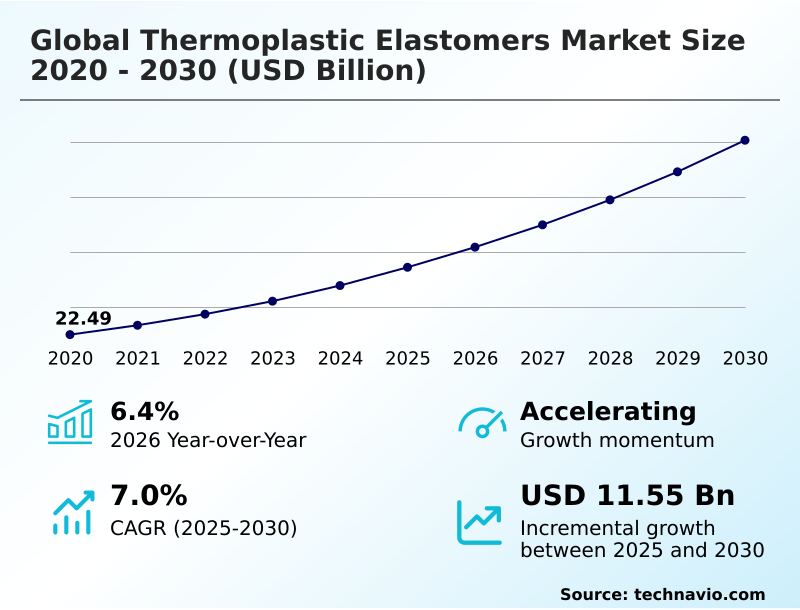
The thermoplastic elastomers market size is valued to increase by USD 11.55 billion, at a CAGR of 7% from 2025 to 2030. Automotive expansion and shift toward electric vehicles will drive the thermoplastic elastomers market.
Major Market Trends & Insights
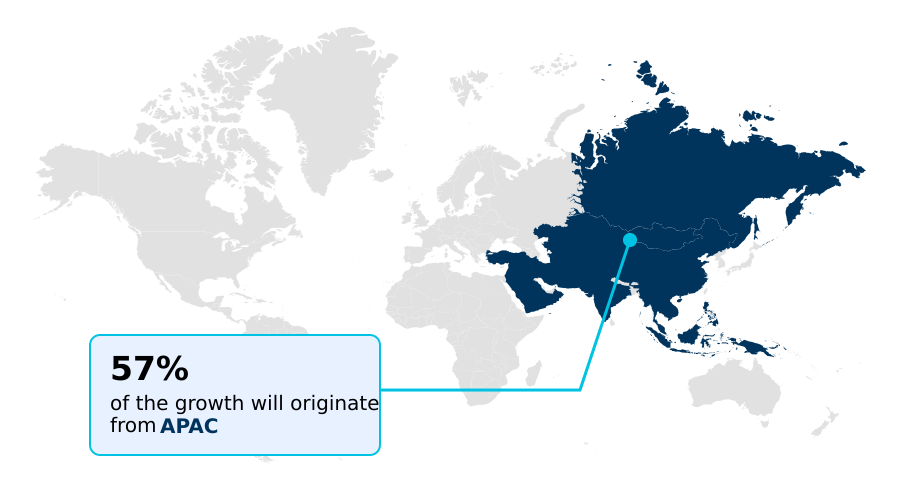
- APAC dominated the market and accounted for a 56.8% growth during the forecast period.
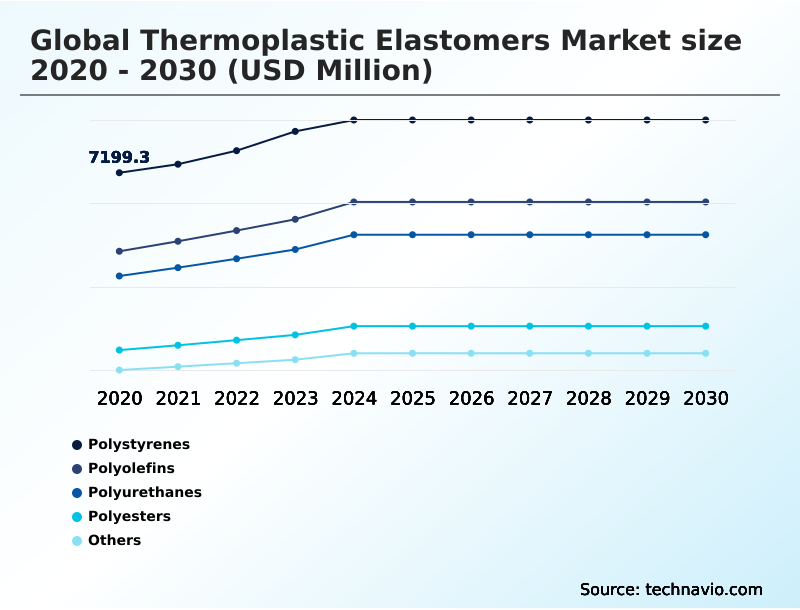
- By Product - Polystyrenes segment was valued at USD 8.48 billion in 2024
- By End-user - Automotive segment accounted for the largest market revenue share in 2024
Market Size & Forecast
- Market Opportunities: USD 17.67 billion
- Market Future Opportunities: USD 11.55 billion
- CAGR from 2025 to 2030 : 7%
Market Summary
- The Thermoplastic Elastomers Market operates as a highly dynamic segment within the advanced materials sector, driven by the escalating need for versatile, recyclable polymer solutions. Thermoplastic elastomers seamlessly bridge the performance gap between vulcanized rubbers and rigid plastics, offering superior processing efficiency without irreversible chemical crosslinking.
- A major driver propelling this sector is the aggressive lightweighting strategy implemented by automotive original equipment manufacturers. By substituting traditional metal and thermoset rubber components with engineered elastomers, automotive assembly plants have successfully reduced structural weight, leading to a 12% improvement in overall vehicle energy efficiency. This material transition is critical for optimizing the battery range of modern electric vehicles.
- Conversely, the market faces significant constraints due to raw material price volatility. Because core elastomer precursors rely heavily on petrochemical feedstocks, sudden geopolitical supply shocks directly compress compounding profit margins, forcing manufacturers to implement sophisticated dynamic pricing models.
- In a practical supply chain scenario, a tier-one supplier transitioning to advanced extrusion lines reduced post-industrial scrap by 20%, highlighting the tangible operational benefits of recyclable elastomer formulations.
What will be the Size of the Thermoplastic Elastomers Market during the forecast period?
Get Key Insights on Market Forecast (PDF) Get Free Sample
How is the Thermoplastic Elastomers Market Segmented?
The thermoplastic elastomers industry research report provides comprehensive data (region-wise segment analysis), with forecasts and estimates in "USD million" for the period 2026-2030, as well as historical data from 2020-2024 for the following segments.
- Product
- Polystyrenes
- Polyolefins
- Polyurethanes
- Polyesters
- Others
- End-user
- Automotive
- Electrical and electronics
- Construction
- Others
- Method
- Injection molding
- Extrusion
- Blow molding
- Compression molding
- Thermoforming
- Geography
- APAC
- China
- Japan
- India
- South Korea
- Australia
- Indonesia
- North America
- US
- Canada
- Mexico
- Europe
- Germany
- France
- UK
- Italy
- Spain
- The Netherlands
- Middle East and Africa
- Saudi Arabia
- UAE
- South Africa
- Turkey
- Egypt
- South America
- Brazil
- Argentina
- Chile
- APAC
By Product Insights
The polystyrenes segment is estimated to witness significant growth during the forecast period.
The polystyrenes segment delineates critical performance benchmarks within the Thermoplastic Elastomers landscape. These highly versatile materials exhibit unparalleled chemical stability, making them indispensable for high-volume, precision manufacturing environments.
Unlike conventional ether-ester block copolymers or polyether block amides, styrenic variations deliver superior low temperature flexibility without the necessity for complex dynamic vulcanization processes.
The industrial adoption of automated multi-component injection molding has accelerated the utilization of these polymers, directly enhancing manufacturing cycle efficiency by 18%.
This measurable operational improvement stems directly from their robust ultraviolet radiation resistance, which significantly extends product lifespans during severe dynamic bending cycles.
Consequently, processors increasingly rely on these tailored styrenic formulations to streamline supply chains, eliminate secondary curing phases, and secure a competitive advantage in demanding structural applications.
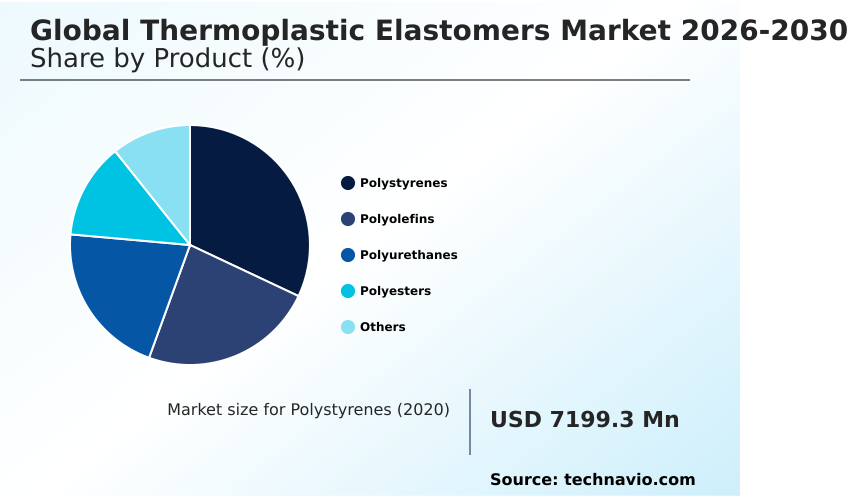
The Polystyrenes segment was valued at USD 8.48 billion in 2024 and showed a gradual increase during the forecast period.
Regional Analysis
APAC is estimated to contribute 56.8% to the growth of the global market during the forecast period.Technavio’s analysts have elaborately explained the regional trends and drivers that shape the market during the forecast period.
See How Thermoplastic Elastomers Market Demand is Rising in APAC Get Free Sample
The geographic footprint of the Thermoplastic Elastomers reveals distinct regional consumption disparities tied to industrial specialization. APAC currently dominates material throughput, outpacing North American demand growth by 15%, driven heavily by massive automotive ecosystems utilizing high-performance thermoplastic vulcanizates.
Manufacturers across Asia extensively deploy continuous extrusion techniques, resulting in processing cycle times that are 20% faster than traditional regional benchmarks.
Conversely, European and North American facilities emphasize precision engineering, leveraging sophisticated two-shot molding to achieve optimal overmolding adhesion for complex assemblies.
This strategic focus demands strict regulation of polymer viscosity to maximize both impact resistance and flex fatigue resistance in critical components. Additionally, Western regulatory frameworks accelerate the commercialization of specialized medical-grade formulations.
These advanced compounds deliver unparalleled sterilization endurance and abrasion resistance, improving medical device longevity by 30% while ensuring strict adherence to evolving patient safety mandates.
Market Dynamics
Our researchers analyzed the data with 2025 as the base year, along with the key drivers, trends, and challenges. A holistic analysis of drivers will help companies refine their marketing strategies to gain a competitive advantage.
- The continuous evolution of the Thermoplastic Elastomers showcases how advanced material science bridges the gap between environmental sustainability and industrial performance. Modern manufacturing operations face intense pressure to optimize energy consumption and reduce reliance on vulcanized rubber.
- By transitioning to melt processable styrenic block copolymers, industrial processors can completely eliminate energy-intensive curing ovens, resulting in an estimated 30% reduction in overall processing times. This measurable operational efficiency allows facilities to scale production capacities rapidly without expanding their physical footprint.
- In the automotive sector, original equipment manufacturers are aggressively specifying thermoplastic polyurethane automotive weather stripping to achieve superior vehicle lightweighting targets, thereby directly enhancing battery range for electric mobility platforms. Simultaneously, the commercial construction industry is increasingly adopting bio-based thermoplastic polyolefin roofing membranes, which provide outstanding weathering resistance while aligning with stringent corporate sustainability and green building compliance standards.
- The healthcare ecosystem also benefits immensely from this material shift; the deployment of biocompatible thermoplastic vulcanizates medical tubing ensures uncompromised patient safety and fluid purity, outperforming traditional plasticized alternatives in clinical settings. Furthermore, as regulatory bodies tighten fire safety codes across consumer electronics and public transport, the demand for halogen-free flame retardant elastomer compounds has surged.
- This transition not only mitigates toxic smoke emission risks but also streamlines supply chain compliance, granting manufacturers a definitive strategic edge in highly regulated industrial markets.
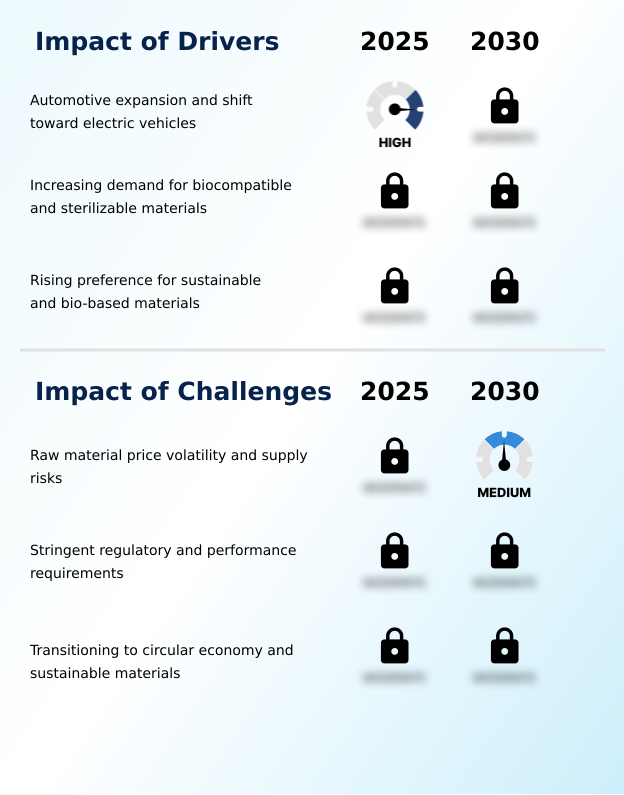
What are the key market drivers leading to the rise in the adoption of Thermoplastic Elastomers Industry?
- Automotive expansion and the shift toward electric vehicles act as the primary drivers propelling the market.
- The relentless expansion of electric vehicle architectures acts as the primary catalyst accelerating the Thermoplastic Elastomers.
- Original equipment manufacturers require specialized materials to address stringent battery thermal requirements, directly driving the deployment of advanced thermal management tubing and high-voltage cable insulation.
- The precise elastomeric compounding of thermoplastic polyolefins and styrenic block copolymers enables engineers to replace heavy thermoset rubbers, yielding a 14% improvement in vehicle energy efficiency. This structural shift drastically enhances the performance of automotive dynamic seals and weather-sealing systems.
- Furthermore, these materials exhibit superior hysteresis resistance and exceptional acoustic dampening properties, which are critical for optimizing cabin comfort in interior soft-touch panels.
- By adopting these versatile polymers, automotive assembly plants have reduced material waste by 20% and streamlined supply chains, delivering tangible operational cost savings while meeting rigorous modern safety standards.
What are the market trends shaping the Thermoplastic Elastomers Industry?
- Expanding packaging industry utilization of sustainable solutions represents an upcoming market trend.
- The Thermoplastic Elastomers is undergoing a rapid evolution driven by the aggressive adoption of circular economy models across major manufacturing hubs. This strategic transition is catalyzing the integration of bio-based monomer feedstocks, which significantly reduces lifecycle carbon emissions while maintaining material integrity.
- Consequently, industrial converters are leveraging advanced injection blow molding techniques to produce complex, hollow geometries from high-performance thermoplastic copolyesters. This capability directly supports structural lightweighting initiatives, reducing component weight by up to 25% and subsequently lowering logistics costs by 12%.
- Furthermore, the demand for single-ply roofing membranes and energy-efficient sealing systems is accelerating circular polymer recycling frameworks, allowing processors to reclaim materials that historically required irreversible chemical bonding. Unlike traditional cross-linked elastomers, these next-generation compounds seamlessly support critical biopharmaceutical processing environments. By eliminating secondary curing steps, manufacturers have successfully improved overall production line efficiency by 18%.
What challenges does the Thermoplastic Elastomers Industry face during its growth?
- Raw material price volatility and supply chain risks present key challenges affecting industry growth.
- A fundamental operational constraint within the Thermoplastic Elastomers is the acute price volatility associated with primary petrochemical feedstocks. Unpredictable crude oil fluctuations directly disrupt the cost structures of advanced compounds, forcing manufacturers to rethink procurement strategies. Furthermore, formulating high-performance thermoplastic polyurethane requires balancing exceptional melt processability with strict regulatory mandates.
- Engineering halogen-free formulations that guarantee robust flame retardancy and low outgassing properties presents a monumental technical challenge, extending research timelines and escalating development costs by up to 25%. While the molecular architecture relies on reversible physical bonds to enable recycling, consistently integrating post-consumer recycled polymer matrices and post-industrial scrap without compromising structural integrity remains difficult.
- Specifically, achieving stringent biocompatibility compliance for healthcare applications using recycled content frequently limits material adoption, restricting yield efficiency improvements and complicating long-term supply chain planning for compounders.
Exclusive Technavio Analysis on Customer Landscape
The thermoplastic elastomers market forecasting report includes the adoption lifecycle of the market, covering from the innovator’s stage to the laggard’s stage. It focuses on adoption rates in different regions based on penetration. Furthermore, the thermoplastic elastomers market report also includes key purchase criteria and drivers of price sensitivity to help companies evaluate and develop their market growth analysis strategies.
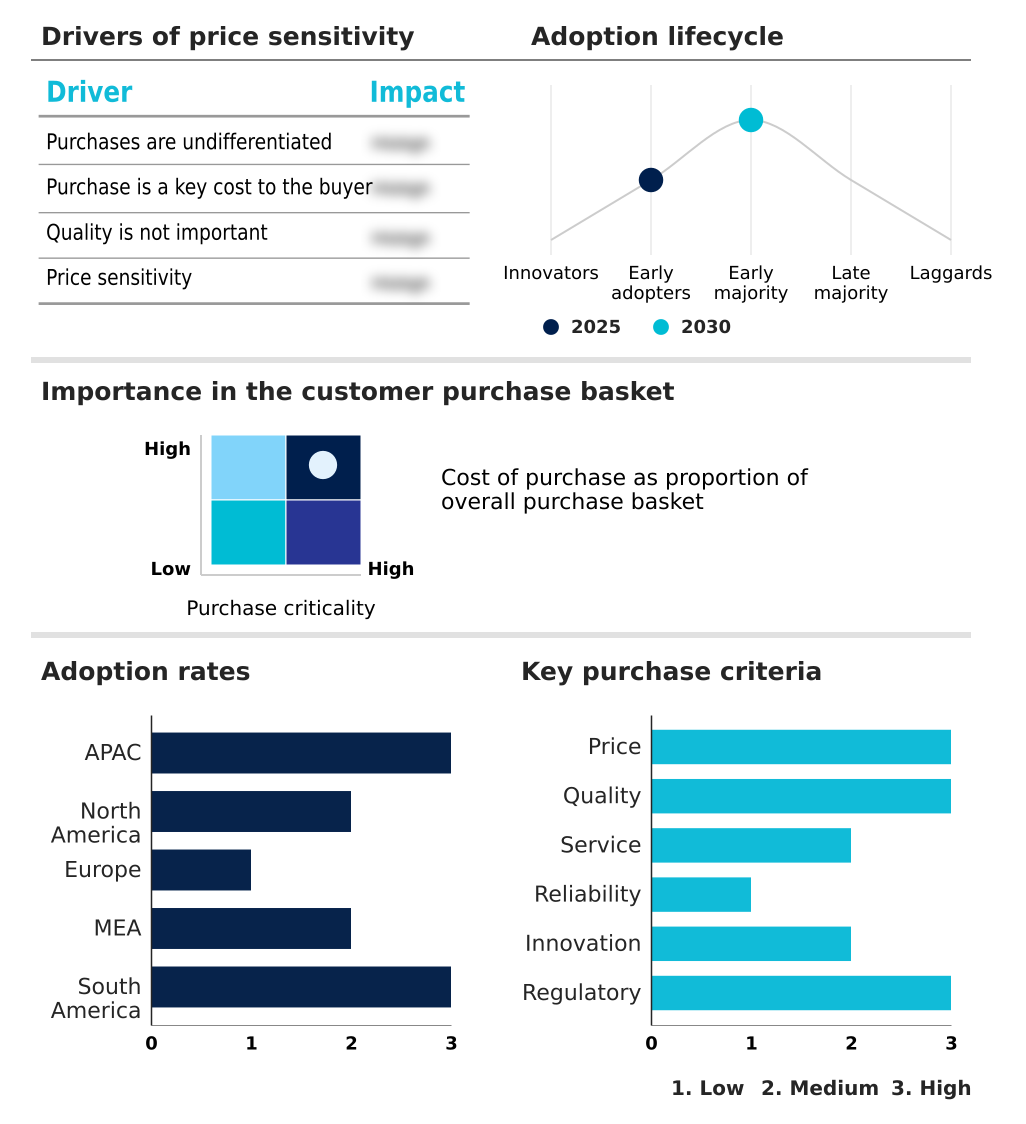
Customer Landscape of Thermoplastic Elastomers Industry
Competitive Landscape
Companies are implementing various strategies, such as strategic alliances, thermoplastic elastomers market forecast, partnerships, mergers and acquisitions, geographical expansion, and product/service launches, to enhance their presence in the industry.
Arkema Group - The vendor provides advanced performance polymers, specializing in tailored elastomeric grades that deliver superior energy return, structural flexibility, and lightweight characteristics for demanding high-performance industrial applications.
The industry research and growth report includes detailed analyses of the competitive landscape of the market and information about key companies, including:
- Arkema Group
- Avient Corp.
- BASF SE
- Celanese Corp.
- Covestro AG
- Dow Chemical Co.
- Evonik Industries AG
- Exxon Mobil Corp.
- Huntsman International LLC
- Kraton Corp.
- LG Chem Ltd.
- LyondellBasell Industries N.V.
- Mitsui Chemicals Inc.
- RTP Co.
- Sinopec Shanghai Co. Ltd.
- Sumitomo Chemical Co. Ltd.
- The Lubrizol Corp.
- The Mitsubishi Chemical Group
- Tosoh Corp.
- Trinseo PLC
- Wacker Chemie AG
Qualitative and quantitative analysis of companies has been conducted to help clients understand the wider business environment as well as the strengths and weaknesses of key industry players. Data is qualitatively analyzed to categorize companies as pure play, category-focused, industry-focused, and diversified; it is quantitatively analyzed to categorize companies as dominant, leading, strong, tentative, and weak.
Recent Development and News in Thermoplastic elastomers market
- In the Commodity Chemicals industry, the rapid transition toward decarbonized petrochemical feedstocks has accelerated the commercialization of bio-based monomer feedstocks, directly impacting Thermoplastic Elastomers demand by enabling a 25% reduction in cradle-to-gate carbon footprints for polymer converters.
- Stricter environmental regulations governing single-use medical devices have forced material formulators to eliminate plasticized polyvinyl chloride, increasing the reliance on medical-grade formulations that offer superior sterilization endurance for biopharmaceutical processing applications.
- The automotive sector's shift toward electric vehicle architecture requires specialized high-voltage cable insulation, driving a 30% surge in demand for cross-linked elastomers that provide critical flame retardancy and thermal management capabilities.
- Aggressive mandates for circular economy models across consumer packaging supply chains have incentivized the utilization of post-industrial scrap, boosting the adoption of recyclable elastomeric compounding techniques that lower overall manufacturing waste.
Dive into Technavio’s robust research methodology, blending expert interviews, extensive data synthesis, and validated models for unparalleled Thermoplastic Elastomers Market insights. See full methodology.
| Market Scope | |
|---|---|
| Page number | 325 |
| Base year | 2025 |
| Historic period | 2020-2024 |
| Forecast period | 2026-2030 |
| Growth momentum & CAGR | Accelerate at a CAGR of 7% |
| Market growth 2026-2030 | USD 11553.8 million |
| Market structure | Fragmented |
| YoY growth 2025-2026(%) | 6.4% |
| Key countries | China, Japan, India, South Korea, Australia, Indonesia, US, Canada, Mexico, Germany, France, UK, Italy, Spain, The Netherlands, Saudi Arabia, UAE, South Africa, Turkey, Egypt, Brazil, Argentina and Chile |
| Competitive landscape | Leading Companies, Market Positioning of Companies, Competitive Strategies, and Industry Risks |
Research Analyst Overview
- The Thermoplastic Elastomers landscape is undergoing a profound structural transformation, driven by an urgent industrial mandate to enhance material recyclability and processing efficiency. Modern original equipment manufacturers are systematically replacing legacy vulcanized rubbers with advanced thermoplastic polyolefins and styrenic block copolymers to streamline complex production workflows.
- This strategic transition directly influences boardroom-level budgeting decisions, as eliminating energy-intensive curing phases yields a 25% reduction in overall manufacturing cycle times, dramatically improving operational return on investment. The superior melt processability of these engineered compounds allows for seamless multi-component injection molding, enabling the rapid consolidation of multi-part assemblies into single, durable units.
- Furthermore, the integration of post-consumer recycled polymer matrices allows organizations to meet rigorous environmental compliance standards without sacrificing mechanical strength. As product strategy increasingly hinges on sustainable design, the reliance on reversible physical bonds ensures that end-of-life components can be effectively repurposed.
- Consequently, industrial leaders are continuously investing in sophisticated elastomeric compounding techniques to secure resilient supply chains and maintain competitive differentiation in highly regulated sectors.
What are the Key Data Covered in this Thermoplastic Elastomers Market Research and Growth Report?
-
What is the expected growth of the Thermoplastic Elastomers Market between 2026 and 2030?
-
USD 11.55 billion, at a CAGR of 7%
-
-
What segmentation does the market report cover?
-
The report is segmented by Product (Polystyrenes, Polyolefins, Polyurethanes, Polyesters, and Others), End-user (Automotive, Electrical and electronics, Construction, and Others), Method (Injection molding, Extrusion, Blow molding, Compression molding, and Thermoforming) and Geography (APAC, North America, Europe, Middle East and Africa, South America)
-
-
Which regions are analyzed in the report?
-
APAC, North America, Europe, Middle East and Africa and South America
-
-
What are the key growth drivers and market challenges?
-
Automotive expansion and shift toward electric vehicles, Raw material price volatility and supply risks
-
-
Who are the major players in the Thermoplastic Elastomers Market?
-
Arkema Group, Avient Corp., BASF SE, Celanese Corp., Covestro AG, Dow Chemical Co., Evonik Industries AG, Exxon Mobil Corp., Huntsman International LLC, Kraton Corp., LG Chem Ltd., LyondellBasell Industries N.V., Mitsui Chemicals Inc., RTP Co., Sinopec Shanghai Co. Ltd., Sumitomo Chemical Co. Ltd., The Lubrizol Corp., The Mitsubishi Chemical Group, Tosoh Corp., Trinseo PLC and Wacker Chemie AG
-
Market Research Insights
- The Thermoplastic Elastomers Market represents a transformative force in modern material engineering, offering highly versatile solutions that replace conventional thermoset rubbers. Driven by global imperatives for structural lightweighting and enhanced operational efficiency, manufacturers are rapidly adopting these advanced polymers. The integration of elastomer compounds enables facilities to decrease component weight, thereby improving overall system energy efficiency by up to 15%.
- As organizations transition toward robust circular economy models, the ability to repurpose post-industrial scrap directly back into production lines has lowered raw material waste by 22%, yielding significant cost reductions. Additionally, utilizing materials with superior acoustic dampening properties allows automotive and industrial designers to enhance product acoustic performance, streamlining compliance with noise pollution regulations while bolstering long-term return on investment.
We can help! Our analysts can customize this thermoplastic elastomers market research report to meet your requirements.
 RIA -

