



Ticket Market Size 2026-2030
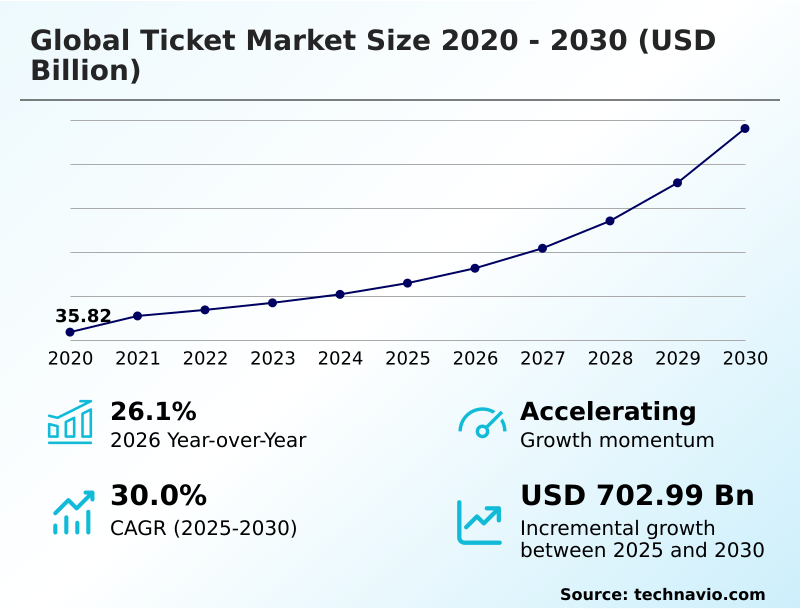
The ticket market size is valued to increase by USD 702.99 billion, at a CAGR of 30% from 2025 to 2030. Elevation of experience economy and shifting consumer spending priorities will drive the ticket market.
Major Market Trends & Insights
- North America dominated the market and accounted for a 36.5% growth during the forecast period.
- By Source - Primary segment was valued at USD 158.81 billion in 2024
- By Type - Sporting events segment accounted for the largest market revenue share in 2024
Market Size & Forecast
- Market Opportunities: USD 925.69 billion
- Market Future Opportunities: USD 702.99 billion
- CAGR from 2025 to 2030 : 30%
Market Summary
- The ticket market is undergoing a significant transformation driven by technological innovation and evolving consumer expectations. Core to this shift is the move from physical vouchers to secure digital assets, managed through sophisticated event management software and online ticketing platforms. This digital transition enables advanced live event revenue management and operational efficiencies.
- A key driver is the consumer-led demand for seamless experiences, compelling providers to adopt mobile wallet integration and contactless entry systems. For instance, a major sports league can leverage a customer data platform to offer personalized promotions and upgrade opportunities in real time, enhancing the fan experience and maximizing per-attendee revenue.
- However, this digitalization brings challenges, including the need for robust bot mitigation technology to ensure fair primary ticket sales and prevent inventory exhaustion. The industry is also shaped by the expansion of secondary segment platforms, which, while providing liquidity, introduce complexities around pricing and regulation that organizers must navigate.
- The market continues to evolve toward a more data-centric and fan-focused model.
What will be the Size of the Ticket Market during the forecast period?
Get Key Insights on Market Forecast (PDF) Request Free Sample
How is the Ticket Market Segmented?
The ticket industry research report provides comprehensive data (region-wise segment analysis), with forecasts and estimates in "USD million" for the period 2026-2030, as well as historical data from 2020-2024 for the following segments.
- Source
- Primary
- Secondary
- Type
- Sporting events
- Movies
- Concerts
- Performing arts
- Distribution channel
- Online
- Offline
- Geography
- North America
- US
- Canada
- Mexico
- Europe
- Germany
- UK
- France
- APAC
- China
- India
- Japan
- South America
- Brazil
- Argentina
- Middle East and Africa
- Saudi Arabia
- UAE
- South Africa
- Rest of World (ROW)
- North America
By Source Insights
The primary segment is estimated to witness significant growth during the forecast period.
The primary segment is the foundational layer of the ticket market, covering the initial, officially sanctioned sale of tickets. This domain has evolved beyond static pricing, with event organizers now using dynamic pricing algorithms and API-driven ticketing to manage sales.
The transition to digital ticketing is nearly complete, with mobile-first ticketing and secure ticket tokenization becoming standard, enhancing data-driven fan engagement.
This digital shift, with digital adoption surpassing 74% in some developed regions, offers benefits like reduced fraud and the capture of valuable consumer data for customer relationship management.
Operators utilize tiered presale access and invest in bot mitigation technology to ensure fair access and protect the integrity of the primary sales channel integrity. Centralized booking engines and real-time sales tracking are now fundamental.
However, challenges in attendee identity verification persist.
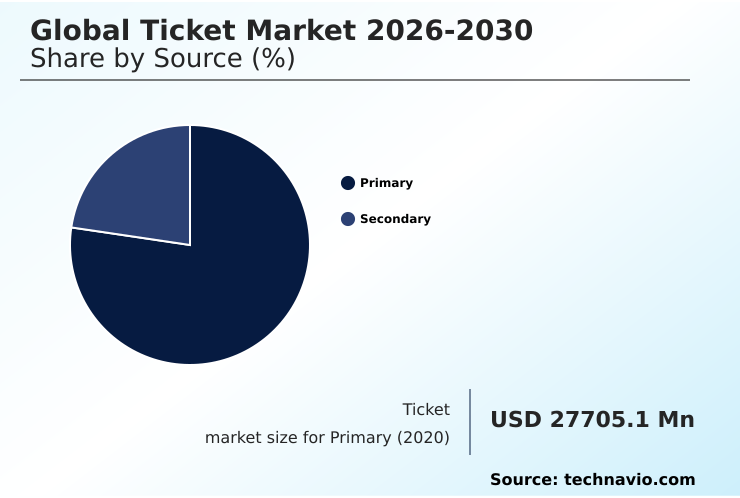
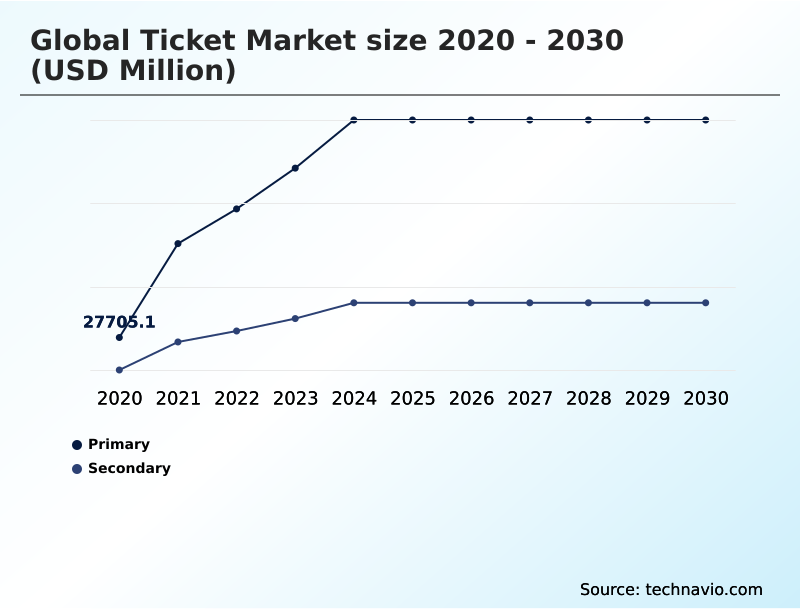
The Primary segment was valued at USD 158.81 billion in 2024 and showed a gradual increase during the forecast period.
Regional Analysis
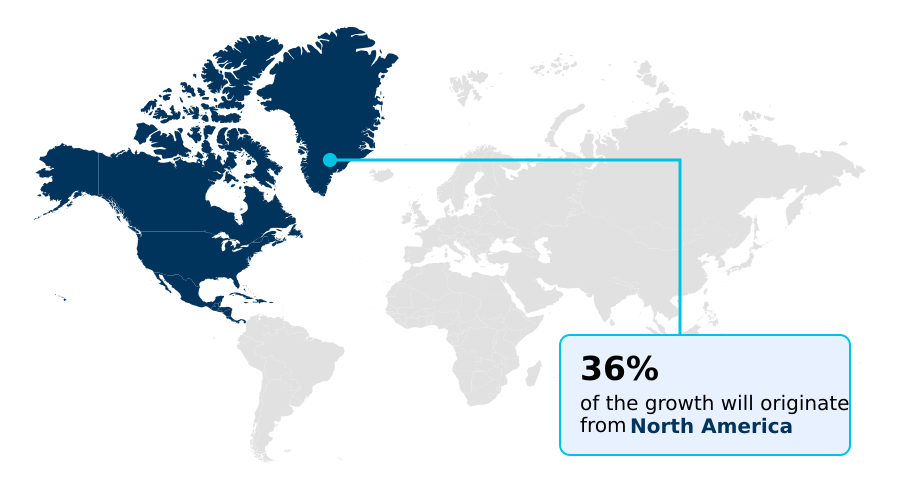
North America is estimated to contribute 36.5% to the growth of the global market during the forecast period.Technavio’s analysts have elaborately explained the regional trends and drivers that shape the market during the forecast period.
See How Ticket Market Demand is Rising in North America Request Free Sample
The geographic landscape of the ticket market is characterized by varying levels of digital maturity and regulatory focus.
In North America and Europe, where digital ticket adoption has surpassed 70%, the focus is on refining the user experience with loyalty program integration and advanced customer relationship management. These regions see high adoption of box office management software.
In contrast, the APAC region is defined by the dominance of super-apps, which integrate event discovery platforms and demand forecasting models for a seamless user journey.
South America is seeing rapid growth in online ticketing platforms, though it requires flexible payment options.
The Middle East is a key growth area, driven by government investment in state-of-the-art venues that require sophisticated access control hardware and biometric verification systems. This global diversification necessitates adaptable multi-channel distribution strategies.
Attendee registration systems and seamless payment processing are becoming global standards.
Market Dynamics
Our researchers analyzed the data with 2025 as the base year, along with the key drivers, trends, and challenges. A holistic analysis of drivers will help companies refine their marketing strategies to gain a competitive advantage.
- The future of the ticket market is being shaped by the convergence of several advanced technologies aimed at solving long-standing industry challenges. A key area of innovation is integrating ticketing with super-app ecosystems, particularly in rapidly growing mobile-first economies.
- For security and transparency, many are turning to blockchain technology for secondary ticket markets, which can virtually eliminate fraud and give organizers control over resale terms. Parallel to this is the use of AI-powered dynamic pricing for sporting events, which optimizes revenue by adjusting prices based on real-time variables.
- This data-centric approach extends to using data analytics to predict event sell-outs. To enhance fan engagement with NFT collectibles, the ticket itself is becoming a digital asset, unlocking exclusive content and experiences. A major operational focus is on cybersecurity measures for online ticketing platforms and developing effective bot mitigation strategies for high-demand onsales to ensure fair access.
- The user experience is also being improved, with mobile wallet integration for contactless venue entry and biometric verification to reduce ticket fraud becoming more common. The industry is also addressing consumer concerns through the impact of all-in pricing on consumer behavior and by implementing flexible payment options for tickets.
- For promoters, yield management techniques for concert tours and managing ticket inventory for music festivals are being refined through better software and analytics. The role of CRM in performing arts subscriptions and the rise of subscription-based models for cinema ticketing show a move toward building long-term customer relationships.
- Technologically, API integrations for third-party ticket distribution are expanding reach, while a focus on improving user experience on ticket resale platforms and leveraging social media for event discovery is crucial for growth.
- Regulatory compliance for cross-border ticket resale remains a complex but critical area, with platforms using advanced analytics to measure ROI of digital marketing in ticketing, reporting improvements over 20% compared to traditional methods.
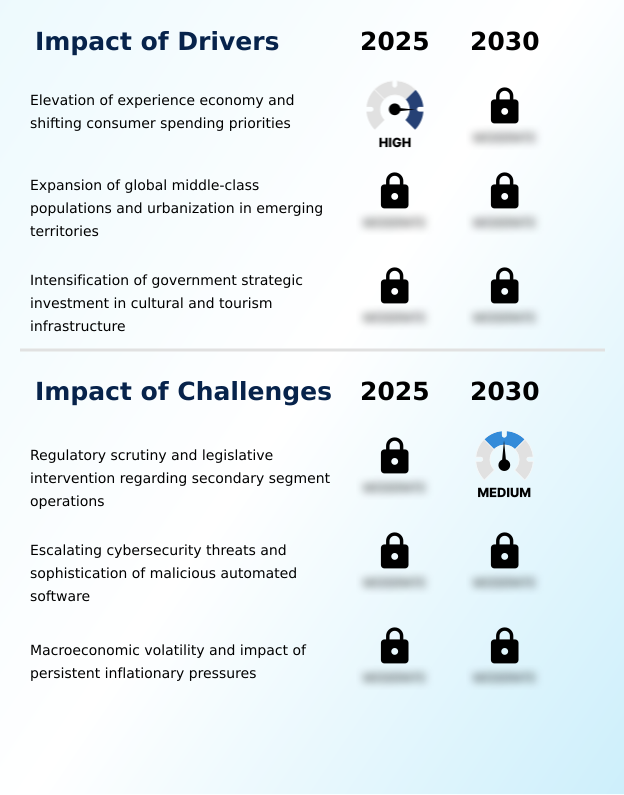
What are the key market drivers leading to the rise in the adoption of Ticket Industry?
- A key driver for the market is the elevation of the experience economy, which is reflected in shifting consumer spending priorities toward live events and memorable engagements.
- Market expansion is significantly propelled by the rise of the experience economy and the rapid growth of the middle class in developing regions, which has expanded the consumer base by over 30% in key emerging markets.
- This demographic shift supports higher demand for event registration services and digital ticket marketplaces.
- Concurrently, strategic government investments in cultural and tourism infrastructure, such as state-of-the-art arenas, have reduced operational barriers for promoters and improved the attendee experience, boosting ticket sales by an average of 15% for events in newly constructed venues.
- This public sector support creates a stable environment for long-term planning, encouraging the adoption of modern technologies like subscription-based ticketing and advanced box office software solutions.
- These factors collectively ensure a sustained upward trajectory for the industry, supported by a growing global appetite for live entertainment.
What are the market trends shaping the Ticket Industry?
- The proliferation of mobile-first digital infrastructure is a defining market trend. This is complemented by the widespread adoption of contactless transactions for enhanced security and user convenience.
- The ticket market is increasingly shaped by the adoption of mobile-first digital infrastructure and contactless transactions, with digital ticket adoption in some regions surpassing 74%. This trend is underpinned by the proliferation of NFT ticketing and blockchain-verified assets, which enhance security and enable new forms of fan engagement platforms.
- AI is also a transformative force, with dynamic pricing algorithms optimizing revenue in real-time, leading to reported revenue increases of up to 20% for high-demand events. These systems rely on sophisticated demand forecasting models.
- Furthermore, the evolution toward an ecosystem model where the ticket acts as a digital key is powered by loyalty program integration and peer-to-peer ticket exchange functionalities, fostering a continuous cycle of engagement that extends beyond the event itself, using both QR code verification and facial recognition entry.
What challenges does the Ticket Industry face during its growth?
- A primary challenge affecting industry growth is the increasing regulatory scrutiny and legislative intervention aimed at governing secondary market operations and enhancing consumer transparency.
- The ticket market confronts significant headwinds from escalating cybersecurity threats and heightened regulatory scrutiny. Sophisticated malicious bots can account for over 80% of traffic during high-demand on-sales, requiring substantial investment in advanced bot mitigation technology and anti-scalping software. This technological arms race increases operational costs by an estimated 15-20% for major platforms.
- Concurrently, legislative mandates for all-in pricing models and transparent fee structures necessitate costly overhauls of back-end systems. Failure to comply with these regulations, alongside the constant threat of data breaches, poses a critical risk to both financial stability and consumer trust in the entire event ticketing ecosystem.
- These challenges demand a focus on primary sales channel integrity and secure digital wallet assets, alongside proactive engagement with policymakers on the future of regulated resale markets.
Exclusive Technavio Analysis on Customer Landscape
The ticket market forecasting report includes the adoption lifecycle of the market, covering from the innovator’s stage to the laggard’s stage. It focuses on adoption rates in different regions based on penetration. Furthermore, the ticket market report also includes key purchase criteria and drivers of price sensitivity to help companies evaluate and develop their market growth analysis strategies.
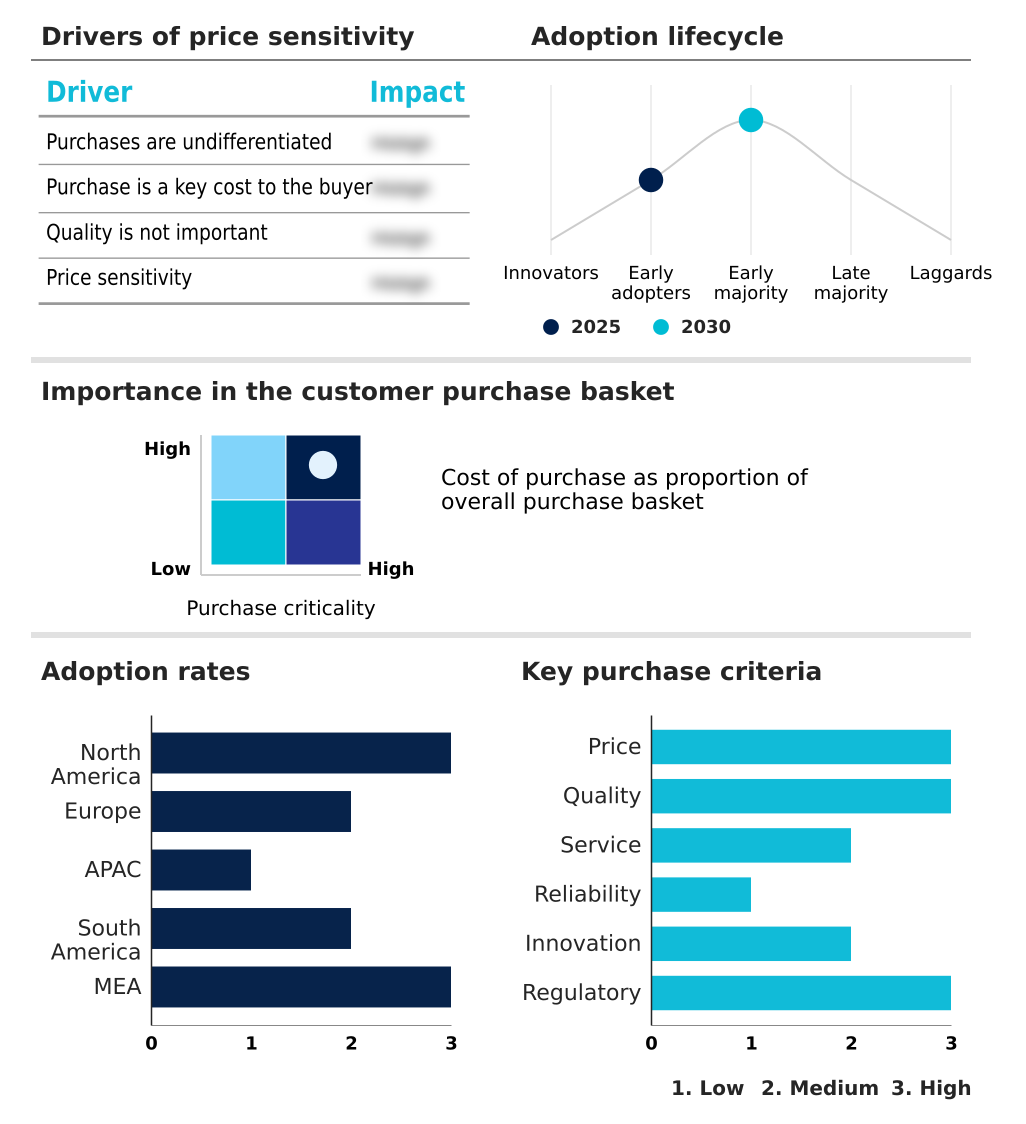
Customer Landscape of Ticket Industry
Competitive Landscape
Companies are implementing various strategies, such as strategic alliances, ticket market forecast, partnerships, mergers and acquisitions, geographical expansion, and product/service launches, to enhance their presence in the industry.
Acme Ticketing LLC - Offerings center on ticketing software and comprehensive venue ticketing solutions, addressing market demands for efficient event management and distribution.
The industry research and growth report includes detailed analyses of the competitive landscape of the market and information about key companies, including:
- Acme Ticketing LLC
- Active Network LLC
- AXS Group LLC
- Bizzabo Inc.
- Etix Inc.
- Eventzilla Corp.
- Gateway Ticketing Systems Inc.
- Globe Ticket and Label Company
- National Ticket Company
- Paciolan Inc.
- RSVPify Inc.
- Saffire LLC
- SeatGeek Inc.
- See Tickets
- Spektrix Ltd.
- ThunderTix Inc.
- Ticket Tailor Ltd.
- TicketLeap
- Ticketmaster LLC
- TicketSpice Inc.
Qualitative and quantitative analysis of companies has been conducted to help clients understand the wider business environment as well as the strengths and weaknesses of key industry players. Data is qualitatively analyzed to categorize companies as pure play, category-focused, industry-focused, and diversified; it is quantitatively analyzed to categorize companies as dominant, leading, strong, tentative, and weak.
Recent Development and News in Ticket market
- In April, 2025, Mercado Libre announced a strategic partnership with Live Nation to introduce Mercado Fan, a novel service offering flexible, interest-free installment plans and optional event insurance for ticket purchases in Brazil, Argentina, and Mexico.
- In March, 2025, European ticketing company CTS Eventim AG and Co. KGaA announced the acquisition of a prominent North American ticketing software company, signaling a strategic expansion and direct challenge to established players in the region.
- In January, 2025, Zomato finalized its acquisition of Paytm's entertainment ticketing division, integrating event ticketing into its food delivery and restaurant discovery super-app to create a comprehensive lifestyle ecosystem.
- In December, 2024, TickPick, a secondary ticket marketplace known for its all-in, no-fee pricing model, successfully secured a substantial Series C funding round to intensify competitive pressure on traditional ticketing platforms.
Dive into Technavio’s robust research methodology, blending expert interviews, extensive data synthesis, and validated models for unparalleled Ticket Market insights. See full methodology.
| Market Scope | |
|---|---|
| Page number | 287 |
| Base year | 2025 |
| Historic period | 2020-2024 |
| Forecast period | 2026-2030 |
| Growth momentum & CAGR | Accelerate at a CAGR of 30% |
| Market growth 2026-2030 | USD 702986.1 million |
| Market structure | Fragmented |
| YoY growth 2025-2026(%) | 26.1% |
| Key countries | US, Canada, Mexico, Germany, UK, France, Italy, Spain, The Netherlands, China, India, Japan, South Korea, Australia, Indonesia, Brazil, Argentina, Chile, Saudi Arabia, UAE, South Africa, Turkey and Israel |
| Competitive landscape | Leading Companies, Market Positioning of Companies, Competitive Strategies, and Industry Risks |
Research Analyst Overview
- The ticket market is defined by a rapid evolution toward highly integrated, data-centric operations. The industry's foundation is shifting from simple transaction processing to sophisticated data-driven fan engagement, powered by a suite of technologies. The adoption of mobile-first ticketing, coupled with mobile wallet integration, has become a baseline expectation, with digital ticket adoption surpassing 74% in mature markets.
- This move enables the use of dynamic pricing algorithms and real-time inventory management, which are critical for maximizing revenue. For boardroom-level strategy, the most critical focus is on security and data integrity, addressed by technologies like blockchain-verified assets and robust fraud detection algorithms.
- The implementation of bot mitigation technology is no longer optional but a required investment to maintain consumer trust. Furthermore, the integration of customer data platforms allows for unprecedented personalization, transforming the ticket from a mere proof of entry into a key component of a broader loyalty and engagement strategy.
What are the Key Data Covered in this Ticket Market Research and Growth Report?
-
What is the expected growth of the Ticket Market between 2026 and 2030?
-
USD 702.99 billion, at a CAGR of 30%
-
-
What segmentation does the market report cover?
-
The report is segmented by Source (Primary, and Secondary), Type (Sporting events, Movies, Concerts, and Performing arts), Distribution Channel (Online, and Offline) and Geography (North America, Europe, APAC, South America, Middle East and Africa)
-
-
Which regions are analyzed in the report?
-
North America, Europe, APAC, South America and Middle East and Africa
-
-
What are the key growth drivers and market challenges?
-
Elevation of experience economy and shifting consumer spending priorities, Regulatory scrutiny and legislative intervention regarding secondary segment operations
-
-
Who are the major players in the Ticket Market?
-
Acme Ticketing LLC, Active Network LLC, AXS Group LLC, Bizzabo Inc., Etix Inc., Eventzilla Corp., Gateway Ticketing Systems Inc., Globe Ticket and Label Company, National Ticket Company, Paciolan Inc., RSVPify Inc., Saffire LLC, SeatGeek Inc., See Tickets, Spektrix Ltd., ThunderTix Inc., Ticket Tailor Ltd., TicketLeap, Ticketmaster LLC and TicketSpice Inc.
-
Market Research Insights
- The ticket market's dynamics are increasingly shaped by technological integration and data-driven strategies aimed at optimizing revenue and enhancing user experience. For example, the adoption of predictive analytics for events has improved demand forecasting accuracy by up to 25%, allowing for better inventory management.
- The implementation of transparent fee structures, a direct response to regulatory pressures, has been shown to increase customer trust, improving checkout conversion rates by 10%. Furthermore, fan engagement platforms that integrate loyalty-driven ticketing models report a 15% higher rate of repeat purchases. This focus on audience segmentation strategies and personalized fan experiences is creating a more resilient and profitable ecosystem.
- Navigating this landscape requires a sophisticated approach to omnichannel sales strategy and real-time inventory management.
We can help! Our analysts can customize this ticket market research report to meet your requirements.
 RIA -
RIA -