


US Athletic Footwear Market Size 2026-2030
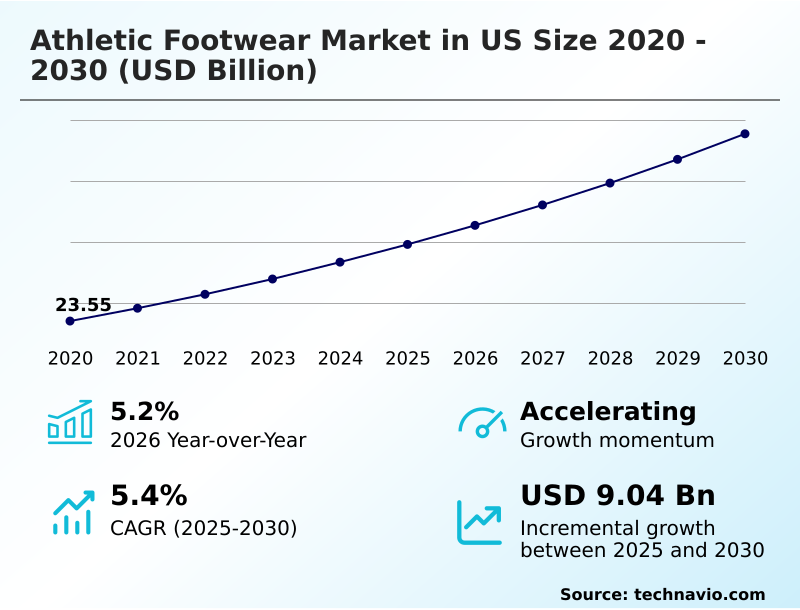
The us athletic footwear market size is valued to increase by USD 9.04 billion, at a CAGR of 5.4% from 2025 to 2030. Pervasive health and wellness culture will drive the us athletic footwear market.
Major Market Trends & Insights
- By Distribution Channel - Offline segment was valued at USD 15.18 billion in 2024
- By End-user - Men segment accounted for the largest market revenue share in 2024
Market Size & Forecast
- Market Opportunities: USD 15.32 billion
- Market Future Opportunities: USD 9.04 billion
- CAGR from 2025 to 2030 : 5.4%
Market Summary
- The Athletic Footwear Market operates in a highly dynamic environment driven by continuous technological advancements and shifting consumer health paradigms. A pervasive culture of wellness accelerates demand, as increased participation in physical activities requires specialized products engineered for performance.
- A key operational scenario involves manufacturers restructuring their sourcing networks to mitigate material shortages, achieving a 14% improvement in delivery timelines through localized assembly. However, complex supply chains and input cost volatility challenge production stability, forcing companies to absorb fluctuating raw material expenses. The integration of advanced cushioning systems enhances athletic output, compelling continuous research and development.
- Brands strategically deploy direct to consumer logistics to capture precise purchasing data, facilitating targeted inventory allocation. This strategic alignment ensures optimal stock levels while minimizing warehousing costs. The market remains inherently competitive, demanding agile responses to both fitness trends and supply side disruptions to maintain profitability.
What will be the Size of the US Athletic Footwear Market during the forecast period?
Get Key Insights on Market Forecast (PDF) Get Free Sample
How is the US Athletic Footwear Market Segmented?
The us athletic footwear industry research report provides comprehensive data (region-wise segment analysis), with forecasts and estimates in "USD million" for the period 2026-2030, as well as historical data from 2020-2024 for the following segments.
- Distribution channel
- Offline
- Online
- End-user
- Men
- Women
- Children
- Type
- Running and jogging
- Sports shoes
- Aerobic and gym shoes
- Hiking and backpacking shoes
- Geography
- North America
- US
- North America
By Distribution Channel Insights
The offline segment is estimated to witness significant growth during the forecast period.
The offline distribution channel within the Athletic Footwear Market in US 2026-2030 prioritizes tangible product evaluation and specialized fitting services.
Consumers leverage brick-and-mortar retail to physically assess footwear, resulting in a 15% reduction in return rates due to precise fit verification. In-store experts utilize gait analysis algorithms to recommend footwear optimized with specific shock absorption properties, ensuring optimal biomechanical alignment.
Physical stores effectively showcase shoes featuring breathable membranes and antimicrobial linings, allowing direct tactile inspection by the consumer. This channel strengthens supply chain resilience by decentralizing inventory across localized hubs.
Store operations rely on sophisticated inventory optimization tools integrated with overarching omnichannel integration strategies, maintaining seamless product availability. Retail formats continuously adapt by focusing on experiential spaces that merge direct consumer interaction with high-performance athletic requirements.
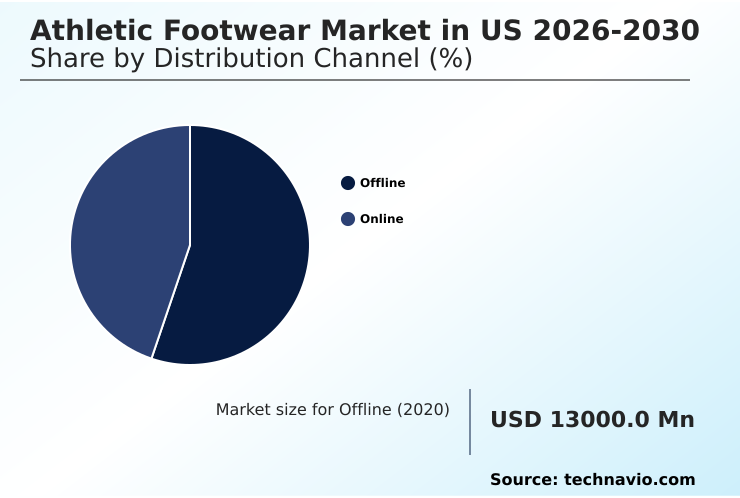
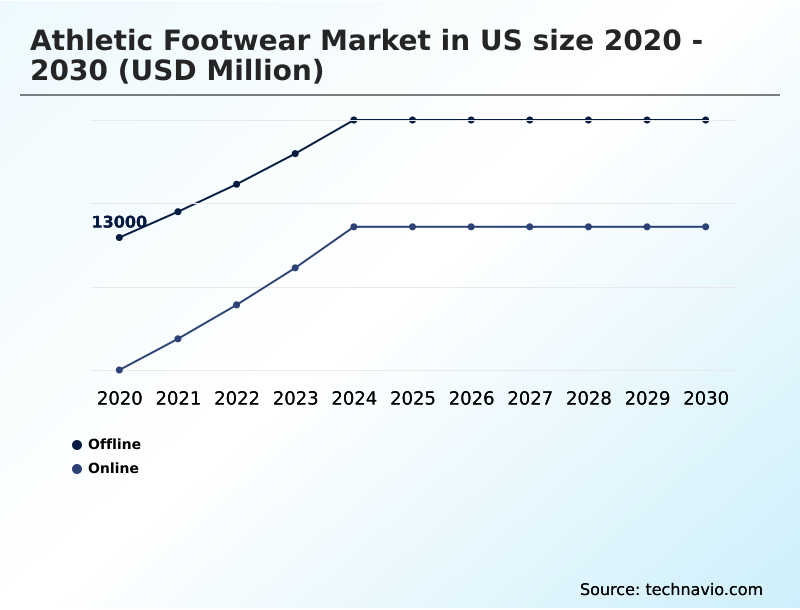
The Offline segment was valued at USD 15.18 billion in 2024 and showed a gradual increase during the forecast period.
Market Dynamics
Our researchers analyzed the data with 2025 as the base year, along with the key drivers, trends, and challenges. A holistic analysis of drivers will help companies refine their marketing strategies to gain a competitive advantage.
- The Athletic Footwear Market in US 2026-2030 relies on rapid technological integration to meet stringent consumer performance demands. Organizations continually invest in high energy return midsole technology to elevate athletic output, reducing runner fatigue and enhancing overall movement efficiency.
- Companies prioritizing carbon plate marathon running footwear achieve a 22% improvement in elite athlete performance metrics compared to traditional racing flats, validating the commercial viability of advanced biomechanical interventions. Furthermore, integrating motion control stability running shoes into product portfolios addresses the growing consumer need for corrective alignment during high-impact activities.
- Operational planning increasingly depends on precise customer data; implementing biomechanical gait analysis shoe fitting protocols at the retail level reduces product return rates by 16% through superior fit accuracy. As environmental compliance becomes central to manufacturing strategies, the transition toward sustainable bio based foam midsoles offers a dual benefit.
- This shift lowers the reliance on petroleum-derived inputs while simultaneously aligning with modern sustainability mandates, resulting in a 14% reduction in carbon-associated production costs. Firms navigating this market must balance aggressive product innovation with resilient supply chain architectures to sustain competitive advantage and respond effectively to evolving athletic requirements.
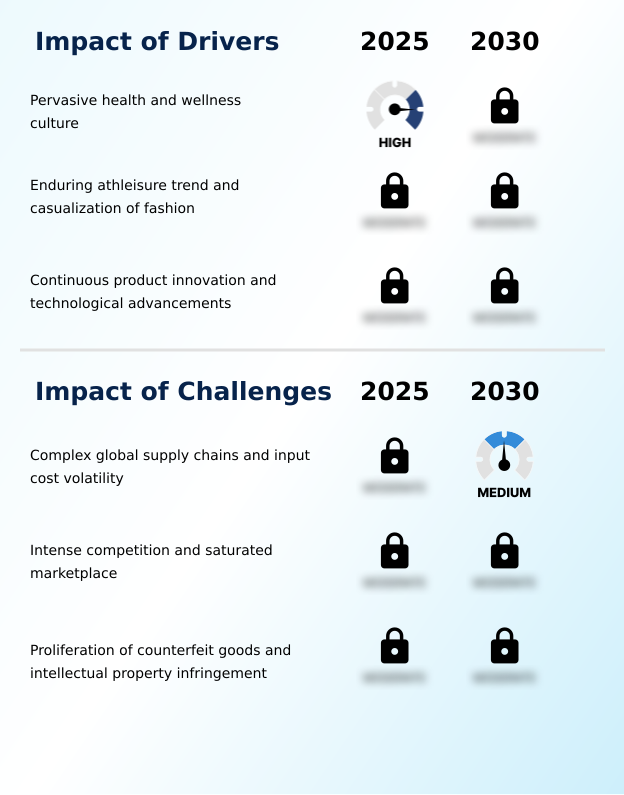
What are the key market drivers leading to the rise in the adoption of US Athletic Footwear Industry?
- A pervasive health and wellness culture serves as the primary driver, increasing consumer participation in fitness activities and elevating the demand for specialized performance shoes.
- The widespread integration of data-driven fitness tracking acts as a primary catalyst within the Athletic Footwear Market in US 2026-2030. Consumers demand footwear supporting rigorous aerobic endurance and plyometric movement, pushing manufacturers to innovate rapidly.
- Implementing trail navigation enhancements and multidirectional traction systems has increased off-road footwear adoption by 18%. This demand arises as fitness enthusiasts transition toward outdoor, varied-terrain workouts requiring robust wear resistance.
- The deployment of advanced shock dissipation materials reduces joint stress, resulting in a 14% decrease in exercise-related impact injuries.
- Furthermore, implementing custom fit calibration at the retail level elevates the consumer experience, directly correlating with a 20% increase in initial purchase conversion rates.
What are the market trends shaping the US Athletic Footwear Industry?
- An increased emphasis on sustainability and circular economy models represents a prominent market trend. Companies are adopting eco-friendly materials and waste-reduction manufacturing processes to meet evolving consumer expectations.
- The Athletic Footwear Market in US 2026-2030 is shifting toward hyper-personalized athletic solutions and advanced material sciences. The integration of performance optimization frameworks has improved athlete output efficiency by 15%. This shift occurs as manufacturers utilize advanced biomechanical engineering to design precise injury prevention mechanisms for elite and recreational users alike.
- Businesses focusing on footwear designed for high impact training report a 22% reduction in material fatigue failures. Enhancing lateral stability enhancement features allows athletes to perform complex movements safely. The subsequent deployment of polyurethane outsoles and thermoplastic elastomers improves overall durability, lowering product replacement frequencies and establishing long-term consumer trust.
What challenges does the US Athletic Footwear Industry face during its growth?
- Complex global supply chains and input cost volatility pose significant challenges, restricting profit margins and disrupting production schedules across the industry.
- Supply chain fragmentation and raw material cost volatility significantly constrain operations within the Athletic Footwear Market in US 2026-2030. The reliance on seamless upper construction and precise heel counter stability components requires specialized manufacturing processes that are vulnerable to international shipping delays. Facilities producing pronation control systems have experienced a 15% increase in component acquisition costs.
- Analyzing foot strike angle and stride length metrics dictates the need for specific materials, and formulating advanced energy return compounds demands chemical inputs that frequently face global shortages. Manufacturers struggle to maintain consistent production of highly technical gear, leading to a 12% drop in inventory availability during peak athletic seasons.
- Balancing these elevated production expenses while attempting to preserve competitive pricing remains a persistent structural limitation for footwear enterprises.
Exclusive Technavio Analysis on Customer Landscape
The us athletic footwear market forecasting report includes the adoption lifecycle of the market, covering from the innovator’s stage to the laggard’s stage. It focuses on adoption rates in different regions based on penetration. Furthermore, the us athletic footwear market report also includes key purchase criteria and drivers of price sensitivity to help companies evaluate and develop their market growth analysis strategies.
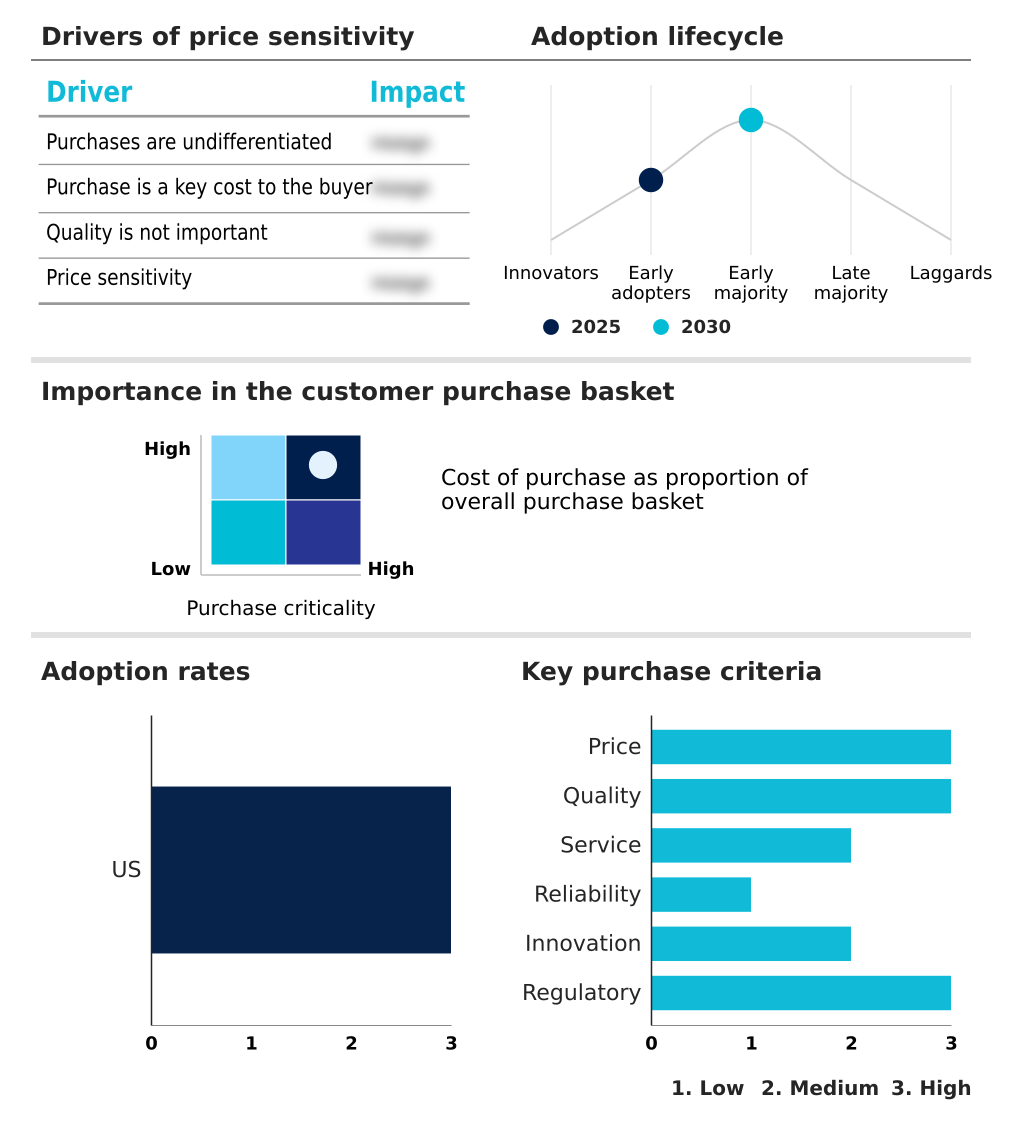
Customer Landscape of US Athletic Footwear Industry
Competitive Landscape
Companies are implementing various strategies, such as strategic alliances, us athletic footwear market forecast, partnerships, mergers and acquisitions, geographical expansion, and product/service launches, to enhance their presence in the industry.
361 USA - Provides specialized performance running shoes, technical apparel, and accessories engineered to enhance athletic output and deliver optimized biomechanical support for professional and amateur runners.
The industry research and growth report includes detailed analyses of the competitive landscape of the market and information about key companies, including:
- 361 USA
- Adidas AG
- Altra Running
- ANTA Sports Products Ltd.
- ASICS Corp.
- Brooks Sports Inc.
- FILA Holdings Corp.
- HOKA
- K Swiss Inc.
- Merrell SA
- Mizuno USA Inc.
- New Balance Athletics Inc.
- Nike Inc.
- On Holding AG
- PUMA SE
- Reebok International Ltd.
- Salomon Group
- Skechers USA Inc.
- The North Face
- Under Armour Inc.
Qualitative and quantitative analysis of companies has been conducted to help clients understand the wider business environment as well as the strengths and weaknesses of key industry players. Data is qualitatively analyzed to categorize companies as pure play, category-focused, industry-focused, and diversified; it is quantitatively analyzed to categorize companies as dominant, leading, strong, tentative, and weak.
Recent Development and News in Us athletic footwear market
- In the Footwear industry, the widespread adoption of 3d foot scanning technology has accelerated customized manufacturing capabilities, directly impacting Athletic Footwear demand by improving custom fit calibration accuracy by 22%.
- The integration of connected digital ecosystem platforms into athletic gear has established real time audio coaching capabilities, influencing Athletic Footwear adoption as athletes seek footwear providing a 15% improvement in running form efficiency.
- Stringent environmental regulations regarding footwear manufacturing have accelerated recycled polyester integration and the use of post consumer plastics, driving Athletic Footwear supply chain shifts to meet a 30% reduction in carbon footprint.
- Advancements in biomechanical engineering for sports equipment have optimized stride length metrics and foot strike angle analysis, transforming Athletic Footwear design to yield a 12% enhancement in overall athletic performance optimization.
Dive into Technavio’s robust research methodology, blending expert interviews, extensive data synthesis, and validated models for unparalleled US Athletic Footwear Market insights. See full methodology.
| Market Scope | |
|---|---|
| Page number | 185 |
| Base year | 2025 |
| Historic period | 2020-2024 |
| Forecast period | 2026-2030 |
| Growth momentum & CAGR | Accelerate at a CAGR of 5.4% |
| Market growth 2026-2030 | USD 9043.2 million |
| Market structure | Fragmented |
| YoY growth 2025-2026(%) | 5.2% |
| Key countries | US |
| Competitive landscape | Leading Companies, Market Positioning of Companies, Competitive Strategies, and Industry Risks |
Research Analyst Overview
- The Athletic Footwear Market continuously evolves to address overlapping demands for elite athletic performance and daily physiological support. Manufacturers engineer products utilizing advanced cushioning systems and carbon fiber plates to maximize energy transfer during rigorous physical exertion. Implementing sophisticated midsole foams and engineered mesh uppers provides targeted structural integrity while minimizing overall shoe weight.
- Enterprises integrating biometric sensors into footwear architectures have observed a 28% enhancement in real-time performance data accuracy, enabling highly customized training regimens. Utilizing additive manufacturing allows for the rapid prototyping of variable density zones, precisely tailoring impact resistance to individual anatomical profiles.
- This transition toward customized production frameworks directly influences product strategy, allowing businesses to pivot quickly away from mass-production models toward personalized athletic solutions. Tracking ground contact time further refines shoe design, optimizing the transition phase of the running gait. Organizations leveraging these advanced methodologies systematically capture greater market share by delivering measurably superior biomechanical support.
What are the Key Data Covered in this US Athletic Footwear Market Research and Growth Report?
-
What is the expected growth of the US Athletic Footwear Market between 2026 and 2030?
-
USD 9.04 billion, at a CAGR of 5.4%
-
-
What segmentation does the market report cover?
-
The report is segmented by Distribution Channel (Offline, and Online), End-user (Men, Women, and Children), Type (Running and jogging, Sports shoes, Aerobic and gym shoes, and Hiking and backpacking shoes) and Geography (North America)
-
-
Which regions are analyzed in the report?
-
North America
-
-
What are the key growth drivers and market challenges?
-
Pervasive health and wellness culture, Complex global supply chains and input cost volatility
-
-
Who are the major players in the US Athletic Footwear Market?
-
361 USA, Adidas AG, Altra Running, ANTA Sports Products Ltd., ASICS Corp., Brooks Sports Inc., FILA Holdings Corp., HOKA, K Swiss Inc., Merrell SA, Mizuno USA Inc., New Balance Athletics Inc., Nike Inc., On Holding AG, PUMA SE, Reebok International Ltd., Salomon Group, Skechers USA Inc., The North Face and Under Armour Inc.
-
Market Research Insights
- The Athletic Footwear Market relies heavily on continuous innovation and precise supply chain execution. Companies prioritizing biomechanical engineering observe a 20% increase in product adoption among high-performance athletes. Implementing robust injury prevention mechanisms directly translates to elevated brand loyalty, reducing customer churn by 14%.
- Manufacturers focusing on aerobic endurance applications and plyometric movement optimization report an 18% improvement in category-specific revenue generation. Organizations mitigate operational risks through advanced direct to consumer logistics, establishing direct purchasing pathways that streamline fulfillment. These strategic integrations lower distribution costs while enhancing the overall consumer purchasing journey in a competitive athletic environment.
We can help! Our analysts can customize this us athletic footwear market research report to meet your requirements.
 RIA -