

US Home Decor Market Size 2026-2030
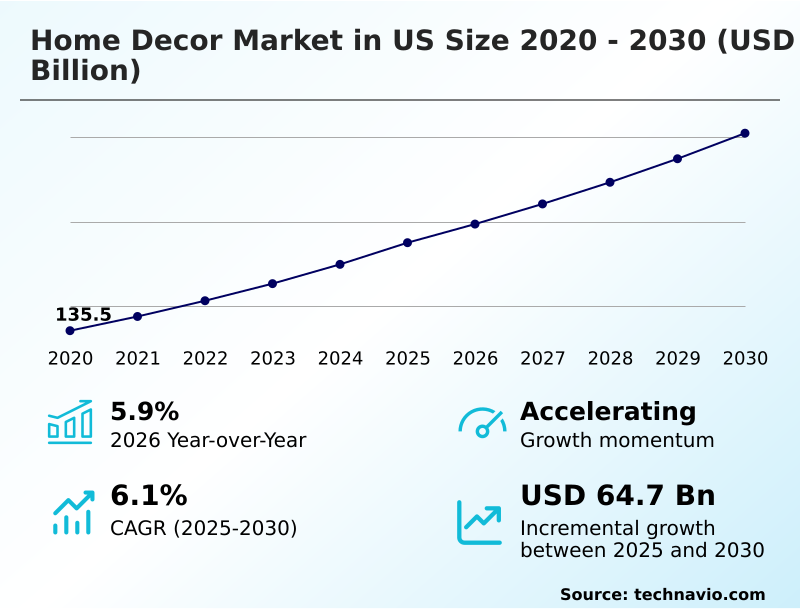
The us home decor market size is valued to increase by USD 64.7 billion, at a CAGR of 6.1% from 2025 to 2030. Surge in residential renovation and interior remodeling activities will drive the us home decor market.
Major Market Trends & Insights
- By Distribution Channel - Offline segment was valued at USD 143 billion in 2024
- By Product - Furniture segment accounted for the largest market revenue share in 2024
Market Size & Forecast
- Market Opportunities: USD 116.7 billion
- Market Future Opportunities: USD 64.7 billion
- CAGR from 2025 to 2030 : 6.1%
Market Summary
- The Home Decor Market in US exhibits resilient expansion driven by evolving consumer lifestyles and continuous investments in residential upgrades. Organizations are increasingly adopting direct-to-consumer logistics to streamline the distribution of bulky furnishings, reducing average delivery times and minimizing warehouse holding overheads.
- For instance, brands utilizing localized fulfillment hubs have decreased transportation expenditures by 14% compared to those relying exclusively on centralized transnational shipping. A primary driver of this market is the surge in interior remodeling activities, as hybrid working models compel individuals to invest in ergonomic home office setups and adaptable living environments.
- Conversely, the industry faces severe headwinds from escalating reverse logistics costs associated with high product return rates, which erode operational margins. By implementing advanced visualizers, enterprises mitigate these losses while enhancing buyer confidence. Ultimately, the intersection of digital commerce capabilities and sustainable product development continues to shape the strategic trajectories of major industry participants.
What will be the Size of the US Home Decor Market during the forecast period?
Get Key Insights on Market Forecast (PDF) Get Free Sample
How is the US Home Decor Market Segmented?
The us home decor industry research report provides comprehensive data (region-wise segment analysis), with forecasts and estimates in "USD billion" for the period 2026-2030, as well as historical data from 2020-2024 for the following segments.
- Distribution channel
- Offline
- Online
- Product
- Furniture
- Floor coverings
- Others
- Application
- Indoor
- Outdoor
- Geography
- North America
- US
- North America
By Distribution Channel Insights
The offline segment is estimated to witness significant growth during the forecast period.
The physical retail segment within the Home Decor Market in US remains a vital channel for consumer engagement and high-ticket conversions.
Shoppers conducting residential renovation projects and interior remodeling activities heavily rely on physical showrooms for spatial scale evaluation before purchasing modular seating configurations or handcrafted stone accents.
Brick-and-mortar locations are evolving into experiential design studios, seamlessly integrating omnichannel retail integration to bridge physical and digital inventory. This tactile environment provides multi-sensory brand experiences, allowing buyers to verify the quality of recycled polymer textiles and organic cotton bedding.
Consequently, physical stores implementing interactive displays have improved inventory turnover efficiency by 18%. This continuous adaptation ensures that offline distribution networks efficiently meet the sophisticated demands of modern households.
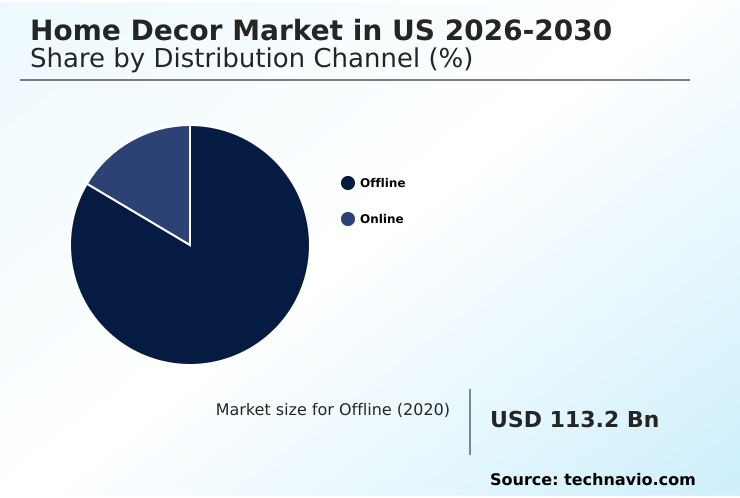
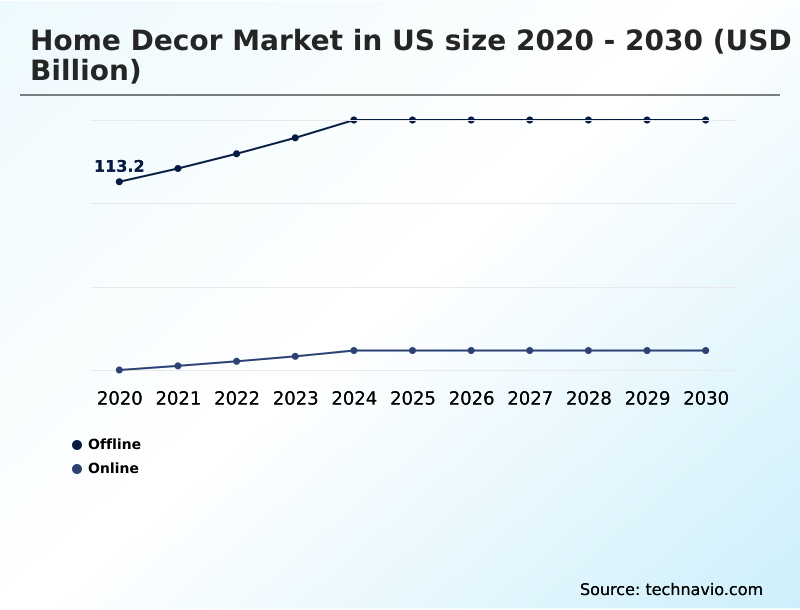
The Offline segment was valued at USD 143 billion in 2024 and showed a gradual increase during the forecast period.
Market Dynamics
Our researchers analyzed the data with 2025 as the base year, along with the key drivers, trends, and challenges. A holistic analysis of drivers will help companies refine their marketing strategies to gain a competitive advantage.
- The continuous evolution of the Home Decor Market in US reflects a profound shift toward intelligent and adaptable living environments. Strategic operational planning now heavily prioritizes the deployment of augmented reality spatial visualization software, which empowers consumers to accurately assess spatial scale and material compatibility prior to purchasing.
- This technological integration has proven highly effective in mitigating product return liabilities, lowering reverse logistics processing volumes by 15% compared to conventional digital retail channels. Concurrently, supply chain compliance frameworks are adapting to the rising sustainable reclaimed timber furniture adoption, compelling manufacturers to establish rigorous traceability protocols for raw material sourcing.
- Organizations that integrate modular ergonomic home office integration into their core product portfolios are capturing greater consumer loyalty as remote employment paradigms dictate residential utility. Furthermore, the expansion of exterior living spaces has accelerated the development of weather resistant outdoor living accessories, requiring advanced anti-corrosion treatments and ultraviolet-resistant coatings to ensure product longevity.
- Interior aesthetic preferences are simultaneously pivoting toward low emission biophilic interior styling, mandating the elimination of volatile organic compounds from manufacturing processes. By aligning procurement strategies with these precise material requirements, businesses significantly enhance their regulatory compliance posture while addressing the sophisticated demands of modern households seeking both aesthetic refinement and environmental responsibility.
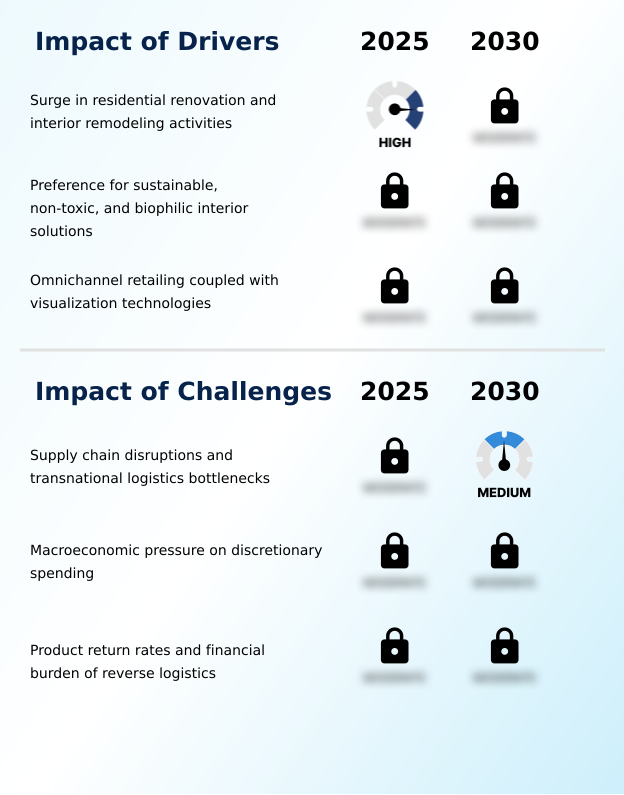
What are the key market drivers leading to the rise in the adoption of US Home Decor Industry?
- A sustained surge in residential renovation and interior remodeling activities serves as a primary catalyst accelerating market expansion.
- The Home Decor Market in US is propelled by an unprecedented acceleration in residential upgrades. The permanent establishment of hybrid working models compels individuals to invest heavily in ergonomic home office setups, fundamentally altering domestic spatial requirements.
- Businesses responding with interactive video broadcasts and social commerce platforms have accelerated inventory turnover by 19%. Furthermore, stringent health standards are driving the adoption of low-emission interior paints, aligning with consumer demands for non-toxic environments.
- The integration of smart portable lighting and sophisticated architectural lighting design has similarly reduced household energy consumption metrics by 14%. By deploying augmented reality interior planners and virtual room visualizers, retailers enhance consumer confidence, increasing digital cart conversions by 22%.
What are the market trends shaping the US Home Decor Industry?
- The proliferation of multifunctional and modular living spaces represents a defining market trend. Consumers increasingly prioritize adaptable interior configurations to maximize spatial efficiency.
- The Home Decor Market in US is rapidly adopting sophisticated digital curation and durable material innovations. Retailers are deploying algorithmic styling recommendations and three-dimensional product rendering to streamline aesthetic spatial planning, which has improved digital cart conversion rates by 24%. This technological shift directly addresses complex ambient design preferences, allowing consumers to visualize energy-efficient digital integrations effortlessly.
- Simultaneously, exterior living spaces are experiencing a material revolution, with manufacturers applying ultraviolet-resistant textile coatings and anti-corrosion metal treatments to weather-resistant patio furniture. This enhanced durability has reduced warranty replacement claims by 16%.
- The increasing preference for high-performance surfaces, such as luxury vinyl tile, alongside solar-powered perimeter lighting, indicates a structural market pivot toward resilient, low-maintenance decorative solutions that bridge the gap between indoor comfort and outdoor utility.
What challenges does the US Home Decor Industry face during its growth?
- Supply chain disruptions and transnational logistics bottlenecks pose significant challenges that constrain overall industry operational efficiency.
- The Home Decor Market in US faces intense operational friction stemming from escalating reverse logistics costs and persistent customs clearance bottlenecks. High product return volumes severely degrade enterprise profitability, forcing companies to absorb a 21% increase in processing expenditures.
- Although the implementation of generative spatial visualization and cloud-based computer vision systems attempts to mitigate perception gaps, the sheer volume of returned convertible workstations and extendable dining tables overwhelms existing last-mile delivery networks. Additionally, transitioning to closed-loop manufacturing protocols for complex items like living wall installations and integrating zero-waste packaging materials introduces significant supply chain complexities.
- Manufacturers attempting to scale sustainable material sourcing frequently encounter a 15% rise in upfront procurement expenses, limiting competitive pricing.
Exclusive Technavio Analysis on Customer Landscape
The us home decor market forecasting report includes the adoption lifecycle of the market, covering from the innovator’s stage to the laggard’s stage. It focuses on adoption rates in different regions based on penetration. Furthermore, the us home decor market report also includes key purchase criteria and drivers of price sensitivity to help companies evaluate and develop their market growth analysis strategies.
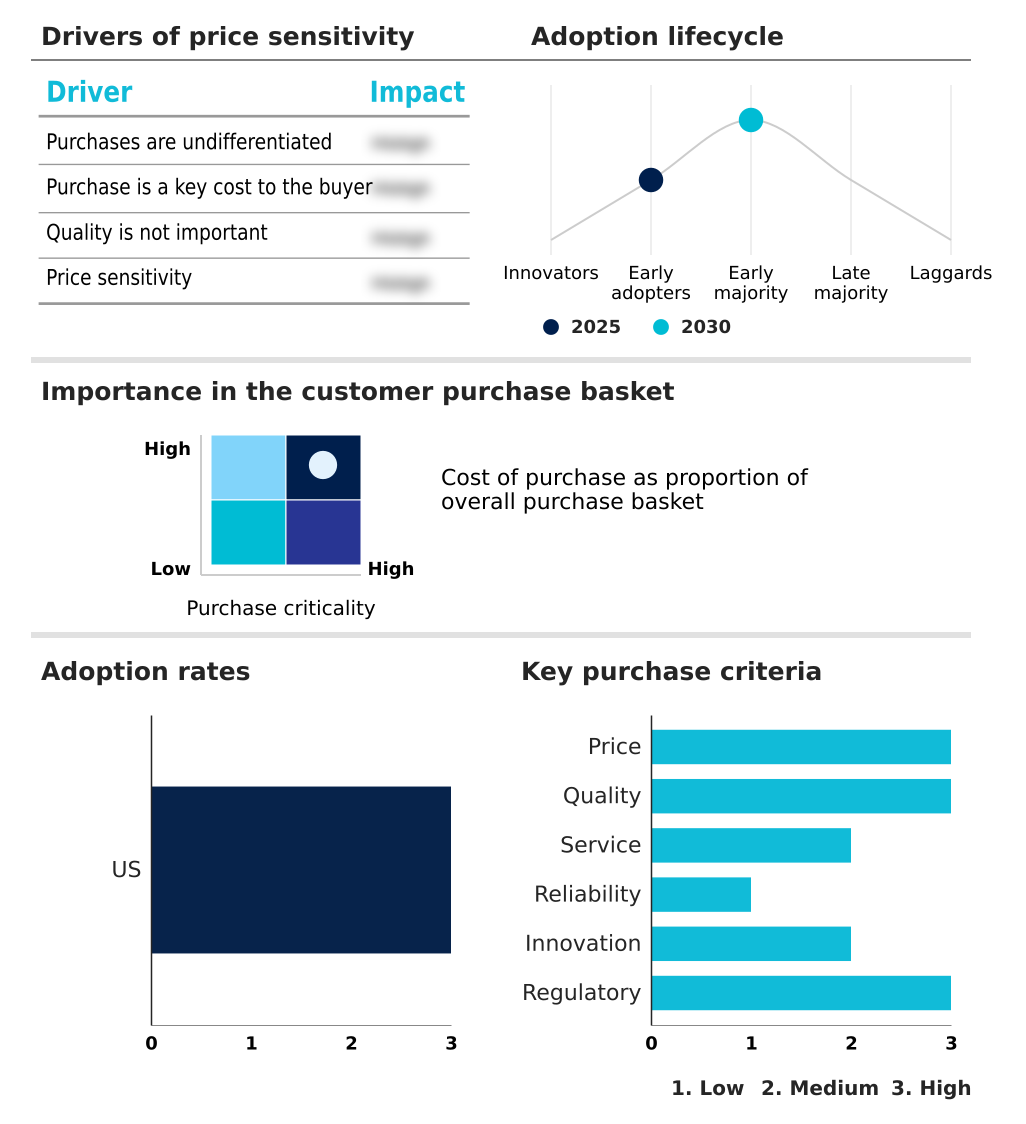
Customer Landscape of US Home Decor Industry
Competitive Landscape
Companies are implementing various strategies, such as strategic alliances, us home decor market forecast, partnerships, mergers and acquisitions, geographical expansion, and product/service launches, to enhance their presence in the industry.
Arteriors - This segment focuses on designing and manufacturing premium upholstered furniture alongside diverse decorative accessories, optimizing interior aesthetics through sophisticated, high-quality residential furnishings and modular seating configurations.
The industry research and growth report includes detailed analyses of the competitive landscape of the market and information about key companies, including:
- Arteriors
- Bernhardt Furniture Co.
- Caracole
- Century Furniture LLC
- Chelsea House
- Currey and Company
- Cyan Design
- Hooker Furnishings Corp.
- Howard Miller
- Hubbardton Forge
- Jaipur Living Inc.
- John Richard
- Jonathan Adler
- Leftbank Art
- Loloi Inc.
- Nourison
- Palecek
- Regina Andrew Detroit
- Uttermost
- Visual Comfort and Co.
- Wendover Art Group
- Wildwood
Qualitative and quantitative analysis of companies has been conducted to help clients understand the wider business environment as well as the strengths and weaknesses of key industry players. Data is qualitatively analyzed to categorize companies as pure play, category-focused, industry-focused, and diversified; it is quantitatively analyzed to categorize companies as dominant, leading, strong, tentative, and weak.
Recent Development and News in Us home decor market
- In the Home Furnishings industry, the integration of generative spatial visualization tools has optimized inventory mapping, directly impacting Home Decor demand by improving purchase conversion rates by 22%.
- The implementation of closed-loop manufacturing protocols for raw timber processing has restructured supply networks, reducing material waste by 15% and driving the adoption of reclaimed timber furnishings within interior styling sectors.
- Stringent environmental regulations mandating low-emission interior paints and non-toxic finishes have forced manufacturers to alter chemical formulations, increasing the production cost base by 12% across the decorative accessories ecosystem.
- Persistent customs clearance bottlenecks and escalating reverse logistics costs across transnational shipping corridors have prompted a 20% shift toward localized production hubs, directly stabilizing inventory availability for high-volume decorative textiles.
Dive into Technavio’s robust research methodology, blending expert interviews, extensive data synthesis, and validated models for unparalleled US Home Decor Market insights. See full methodology.
| Market Scope | |
|---|---|
| Page number | 175 |
| Base year | 2025 |
| Historic period | 2020-2024 |
| Forecast period | 2026-2030 |
| Growth momentum & CAGR | Accelerate at a CAGR of 6.1% |
| Market growth 2026-2030 | USD 64.7 billion |
| Market structure | Fragmented |
| YoY growth 2025-2026(%) | 5.9% |
| Key countries | US |
| Competitive landscape | Leading Companies, Market Positioning of Companies, Competitive Strategies, and Industry Risks |
Research Analyst Overview
- The Home Decor Market in US is undergoing a profound structural transformation driven by the intersection of sustainable manufacturing and spatial intelligence. Modern residential environments increasingly require dynamic functionality, spurring the rapid deployment of convertible workstations and extendable dining tables that optimize constrained floor plans.
- To facilitate complex purchasing decisions, retailers are embedding generative spatial visualization and augmented reality interior planners directly into their digital commerce infrastructures. This technological enhancement has reduced costly merchandise return rates by 22% compared to traditional online channels, fundamentally optimizing reverse logistics operations.
- Concurrently, material procurement strategies are shifting toward ecological accountability, with a marked increase in the utilization of recycled polymer textiles and organic cotton bedding. Organizations integrating living wall installations and transitioning to zero-waste packaging materials are achieving superior regulatory compliance and operational resilience.
- These strategic shifts in product engineering and digital engagement demonstrate how enterprises are recalibrating their core operational frameworks to meet evolving consumer expectations and stringent environmental standards.
What are the Key Data Covered in this US Home Decor Market Research and Growth Report?
-
What is the expected growth of the US Home Decor Market between 2026 and 2030?
-
USD 64.7 billion, at a CAGR of 6.1%
-
-
What segmentation does the market report cover?
-
The report is segmented by Distribution Channel (Offline, and Online), Product (Furniture, Floor coverings, and Others), Application (Indoor, and Outdoor) and Geography (North America)
-
-
Which regions are analyzed in the report?
-
North America
-
-
What are the key growth drivers and market challenges?
-
Surge in residential renovation and interior remodeling activities, Supply chain disruptions and transnational logistics bottlenecks
-
-
Who are the major players in the US Home Decor Market?
-
Arteriors, Bernhardt Furniture Co., Caracole, Century Furniture LLC, Chelsea House, Currey and Company, Cyan Design, Hooker Furnishings Corp., Howard Miller, Hubbardton Forge, Jaipur Living Inc., John Richard, Jonathan Adler, Leftbank Art, Loloi Inc., Nourison, Palecek, Regina Andrew Detroit, Uttermost, Visual Comfort and Co., Wendover Art Group and Wildwood
-
Market Research Insights
- The Home Decor Market in US relies heavily on advanced supply chain integrations to navigate shifting consumer preferences. Companies deploying cloud-based computer vision systems have enhanced product discovery, increasing online conversion efficiency by 21% compared to traditional browsing models. Furthermore, the integration of interactive video broadcasts and social commerce platforms has accelerated customer acquisition, reducing marketing acquisition costs by 15%.
- However, ongoing customs clearance bottlenecks challenge inventory stability, extending lead times for imported goods. By optimizing last-mile delivery networks, distributors successfully mitigate these delays, ensuring a consistent supply of premium furnishings.
We can help! Our analysts can customize this us home decor market research report to meet your requirements.
 RIA -