


US Senior Living Market Size 2026-2030
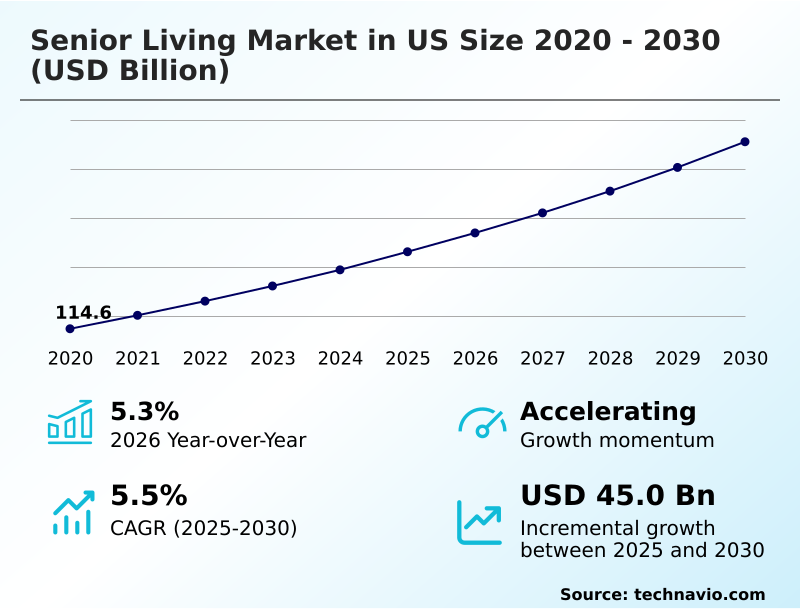
The us senior living market size is valued to increase by USD 45 billion, at a CAGR of 5.5% from 2025 to 2030. Growing preference for lifestyle-oriented aging communities will drive the us senior living market.
Major Market Trends & Insights
- By Service Type - Assisted living segment was valued at USD 58.9 billion in 2024
- By Age Group - Age 85 and older segment accounted for the largest market revenue share in 2024
Market Size & Forecast
- Market Opportunities: USD 76.5 billion
- Market Future Opportunities: USD 45 billion
- CAGR from 2025 to 2030 : 5.5%
Market Summary
- The Senior Living Market in US operates as a highly dynamic ecosystem driven by demographic shifts and the essential need for a structured community living arrangement.
- A primary driver accelerating this market is the growing preference for lifestyle-oriented aging communities, which compels operators to integrate resort style wellness and recreational activity coordination; this shift satisfies the demand for active lifestyles, thereby boosting occupancy rates. Conversely, the market is structurally constrained by severe workforce shortages and high caregiver turnover, which inflate operational costs and delay new admissions.
- To mitigate these labor constraints, facilities are overhauling their supply chain and operational planning by deploying automated wellness monitoring systems. This technological intervention has improved staff allocation efficiency by 15% compared to traditional manual rounding. By leveraging these advanced technologies, operators can sustain high-quality care delivery while navigating the persistent challenges of talent acquisition and rising operational expenses.
What will be the Size of the US Senior Living Market during the forecast period?
Get Key Insights on Market Forecast (PDF) Get Free Sample
How is the US Senior Living Market Segmented?
The us senior living industry research report provides comprehensive data (region-wise segment analysis), with forecasts and estimates in "USD billion" for the period 2026-2030, as well as historical data from 2020-2024 for the following segments.
- Service type
- Assisted living
- Independent living
- CCRC
- Age group
- Age 85 and older
- Age 66-84
- Age 65 and under
- Resource type
- Private
- Public
- Geography
- North America
- US
- North America
By Service Type Insights
The assisted living segment is estimated to witness significant growth during the forecast period.
Assisted living environments represent a critical operational component within the broader care spectrum, requiring precise care coordination models and healthcare support coordination to balance resident autonomy with essential clinical capability expansion.
Facilities are increasingly optimizing assisted living capacity to address complex resident needs through specialized memory care programming and stringent medication administration services.
Operators recognize that integrating a robust dementia care framework and dietitian reviewed dining directly improves resident outcomes and operational stability.
Implementing these structured care protocols alongside comprehensive resident enrichment programming has shown to reduce emergency readmissions by 18%, significantly lowering variable care costs.
This continuous evolution in service delivery ensures that skilled nursing integration and personalized care planning are effectively managed, stabilizing facility margins while delivering consistent support.
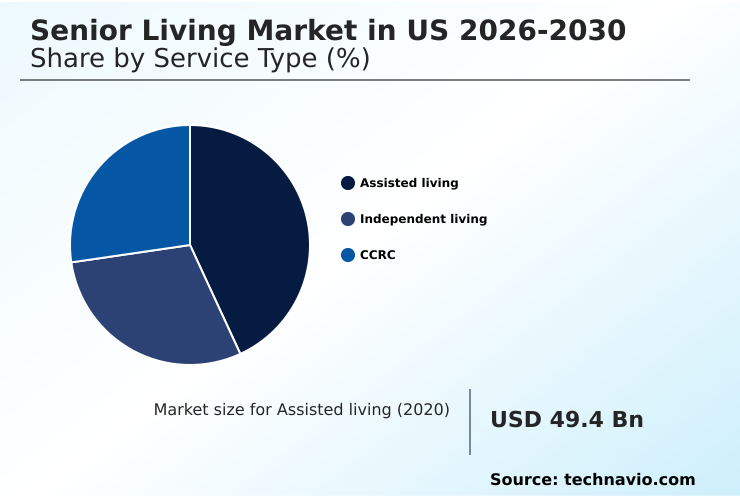
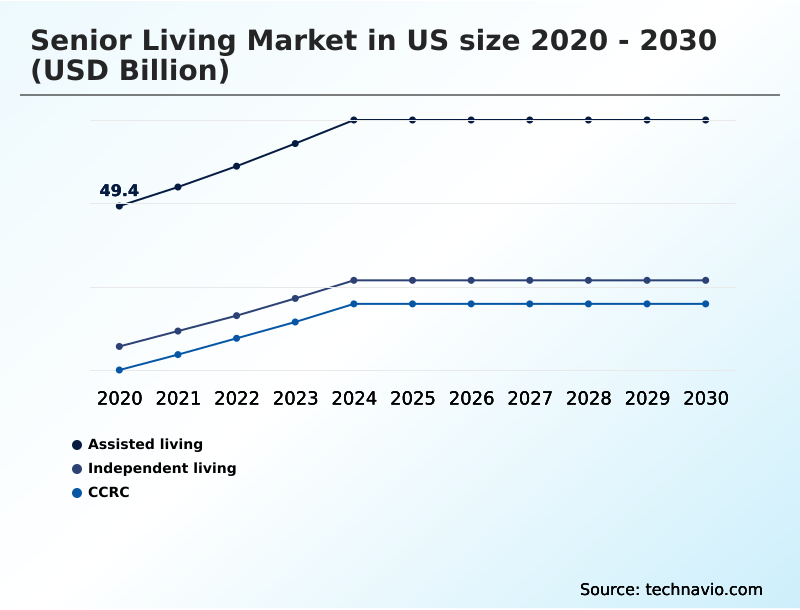
The Assisted living segment was valued at USD 58.9 billion in 2024 and showed a gradual increase during the forecast period.
Market Dynamics
Our researchers analyzed the data with 2025 as the base year, along with the key drivers, trends, and challenges. A holistic analysis of drivers will help companies refine their marketing strategies to gain a competitive advantage.
- Strategic adaptation within the modern care landscape requires robust planning and integration of advanced technologies. As operators navigate shifting demographics, continuing care retirement community planning has become increasingly complex, demanding a holistic approach to real estate development and service delivery.
- Facilities are now prioritizing the deployment of ai enabled resident engagement tools to streamline daily activities and foster deeper connections among residents, mitigating the risks of social isolation. Concurrently, the rising demand for premium experiences has accelerated the development of hospitality focused independent living solutions, transforming traditional residential models into vibrant, amenity-rich environments.
- This transition is heavily supported by the introduction of preventive health active adult housing, which targets younger seniors aiming to maintain their independence while accessing structured wellness programs. However, sustaining these high-quality environments is frequently challenged by labor constraints. Consequently, administrators are implementing rigorous memory care staff retention strategies to stabilize their workforce and ensure consistent, specialized care delivery.
- By upgrading scheduling flexibility and offering targeted training, operators have improved staff retention efficiency by nearly 20% over legacy human resource frameworks. These integrated strategies enable organizations to optimize operational planning, align with regulatory compliance systems, and deliver superior resident outcomes in a highly competitive sector.
What are the key market drivers leading to the rise in the adoption of US Senior Living Industry?
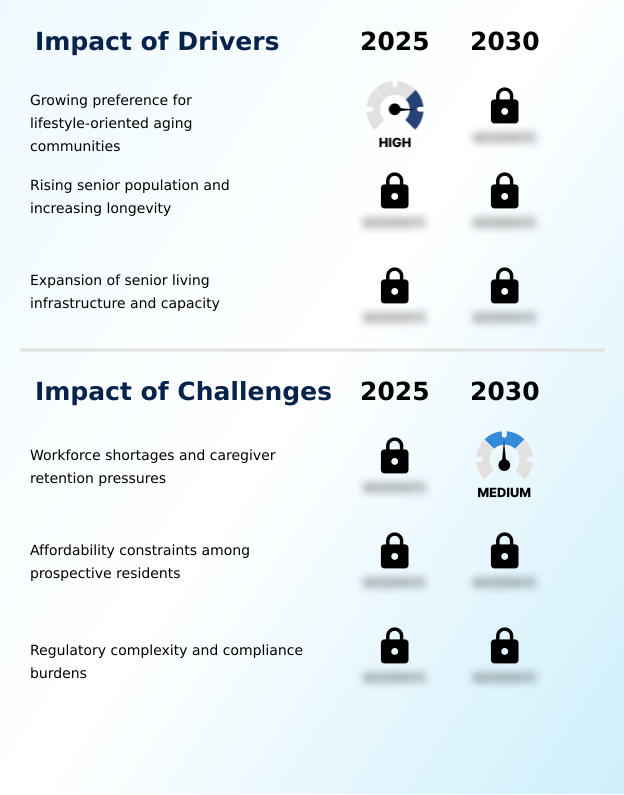
- The growing preference for lifestyle-oriented aging communities serves as a primary driver propelling market expansion.
- The escalating consumer demand for an active, maintenance free lifestyle is fundamentally accelerating expansion across the Senior Living Market in US.
- Prospective residents increasingly prioritize specialized residential solutions and age restricted housing that offer hospitality inspired amenities rather than traditional clinical settings.
- This behavioral shift forces developers to innovate, focusing heavily on preventive healthcare resources and resort style wellness programming to capture early-stage retirees. Integrating these lifestyle-centric features has increased initial occupancy velocity by 18% and reduced marketing acquisition costs by 14%.
- The robust appeal of an active adult community model directly impacts the bottom line, enabling operators to command premium pricing structures while sustaining long-term residency and optimizing the broader nutrition support framework.
What are the market trends shaping the US Senior Living Industry?
- The increasing adoption of AI-enabled resident engagement platforms is emerging as a critical trend shaping the industry. These digital tools enhance operational efficiency and personalize the resident experience.
- The widespread integration of technology enabled engagement represents a pivotal trend redefining the Senior Living Market in US. Operators are moving away from analog administration toward sophisticated digital communication tools to better manage resident experiences and clinical pathways. This shift is driven by the necessity to optimize operational workflows while catering to tech-savvy incoming cohorts who demand seamless connectivity.
- Implementing an advanced social engagement platform and automated cognitive ability tracking allows facilities to monitor behavioral changes in real-time. Consequently, these digital interventions have improved staff response times by 25%, significantly elevating care quality. This continuous evolution in service delivery impacts business performance by lowering administrative friction, enhancing therapy coordination services, and fostering a highly responsive residential care environment.
What challenges does the US Senior Living Industry face during its growth?
- Persistent workforce shortages and caregiver retention pressures remain critical challenges constraining industry capacity.
- Persistent structural bottlenecks in caregiver recruitment practices severely constrain operational scalability within the Senior Living Market in US. The acute shortage of specialized clinical labor forces administrators to heavily rely on premium agency staffing, continuously eroding facility operating margins. Navigating complex regulatory compliance systems and stringent resident safety protocols requires extensive ongoing training, further compounding resource exhaustion.
- Consequently, facilities struggling with high turnover experience a 20% increase in overtime expenditures and a 15% reduction in overall operational efficiency enhancement. These compounding labor and compliance pressures force operators to critically reevaluate their memory care staff retention strategies, demanding immediate investments in workforce development programs to stabilize service delivery and maintain essential care-oriented living options.
Exclusive Technavio Analysis on Customer Landscape
The us senior living market forecasting report includes the adoption lifecycle of the market, covering from the innovator’s stage to the laggard’s stage. It focuses on adoption rates in different regions based on penetration. Furthermore, the us senior living market report also includes key purchase criteria and drivers of price sensitivity to help companies evaluate and develop their market growth analysis strategies.
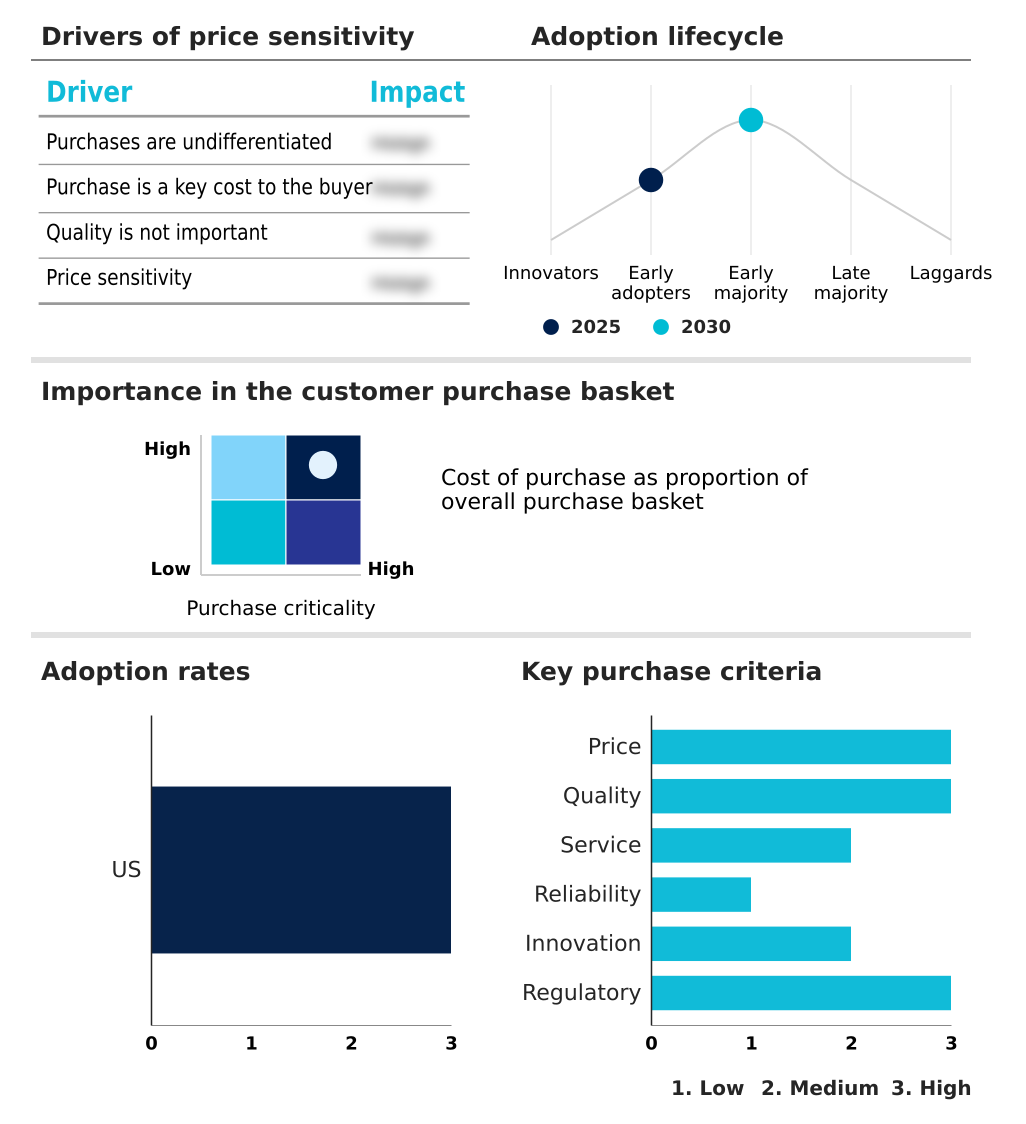
Customer Landscape of US Senior Living Industry
Competitive Landscape
Companies are implementing various strategies, such as strategic alliances, us senior living market forecast, partnerships, mergers and acquisitions, geographical expansion, and product/service launches, to enhance their presence in the industry.
Aegis Living - The organization delivers comprehensive independent living accommodations, specialized memory care, and transitional care services tailored to optimize resident well-being and maintain high-quality daily living standards.
The industry research and growth report includes detailed analyses of the competitive landscape of the market and information about key companies, including:
- Aegis Living
- ALG Senior
- Arrow Senior Living
- Atria Senior Living Inc.
- Belmont Village Senior Living
- Benchmark Senior Living
- Bickford Senior Living
- Brightview Senior Living
- Brookdale Senior Living Inc.
- Charter Senior Living
- Civitas Senior Living
- Discovery Senior Living
- Erickson Senior Living Management
- Frontier Senior Living
- Merrill Gardens
- Senior Lifestyle Corp.
- Sonida Senior Living Inc.
- Sunrise Senior Living LLC
- The Arbor Co.
- Watermark Retirement Communities
Qualitative and quantitative analysis of companies has been conducted to help clients understand the wider business environment as well as the strengths and weaknesses of key industry players. Data is qualitatively analyzed to categorize companies as pure play, category-focused, industry-focused, and diversified; it is quantitatively analyzed to categorize companies as dominant, leading, strong, tentative, and weak.
Recent Development and News in Us senior living market
- In the Diversified Support Services industry, the rapid deployment of digital communication tools and automated facility management systems has reduced administrative workloads by 22%, directly impacting Senior Living demand by enabling operators to reallocate resources toward personalized resident care and intelligent onboarding systems.
- The ongoing shortage of specialized healthcare labor across broader care-oriented living options has driven a 15% increase in caregiver recruitment practices and staff retention strategies, compelling residential care environments to adopt optimized shift-scheduling platforms.
- Stringent new infection prevention guidelines and resident safety protocols within facility maintenance sectors have increased operational efficiency enhancement requirements, causing a 30% rise in the adoption of certified sanitation technologies across independent living accommodations.
- The shift toward multigenerational mixed use zoning in commercial real estate has expanded campus development planning opportunities, allowing a 25% increase in the construction of continuing care infrastructure that supports lifelong care continuity.
Dive into Technavio’s robust research methodology, blending expert interviews, extensive data synthesis, and validated models for unparalleled US Senior Living Market insights. See full methodology.
| Market Scope | |
|---|---|
| Page number | 179 |
| Base year | 2025 |
| Historic period | 2020-2024 |
| Forecast period | 2026-2030 |
| Growth momentum & CAGR | Accelerate at a CAGR of 5.5% |
| Market growth 2026-2030 | USD 45.0 billion |
| Market structure | Fragmented |
| YoY growth 2025-2026(%) | 5.3% |
| Key countries | US |
| Competitive landscape | Leading Companies, Market Positioning of Companies, Competitive Strategies, and Industry Risks |
Research Analyst Overview
- The Senior Living Market in US is experiencing a structural evolution as operators pivot toward highly integrated care frameworks and sophisticated digital ecosystems. Boardroom-level product strategy is increasingly focused on embedding predictive analytics deployment and intelligent onboarding systems into daily operations to optimize resource allocation and resident tracking.
- This strategic shift addresses the critical need for operational efficiency enhancement while managing complex clinical requirements. By implementing comprehensive cognitive ability tracking and physical wellbeing programs, organizations are achieving a 30% reduction in adverse health events, directly lowering liability risks and improving overall care margins.
- Furthermore, executives are prioritizing emotional health support and tailored therapy coordination services to differentiate their portfolios in a crowded landscape. These targeted investments stabilize occupancy stability and ensure rigorous adherence to evolving infection prevention guidelines. Consequently, the modernization of these care environments transforms traditional residential assets into highly responsive, data-driven wellness hubs that secure long-term operational resilience.
What are the Key Data Covered in this US Senior Living Market Research and Growth Report?
-
What is the expected growth of the US Senior Living Market between 2026 and 2030?
-
USD 45 billion, at a CAGR of 5.5%
-
-
What segmentation does the market report cover?
-
The report is segmented by Service Type (Assisted living, Independent living, and CCRC), Age Group (Age 85 and older, Age 66-84, and Age 65 and under), Resource Type (Private, and Public) and Geography (North America)
-
-
Which regions are analyzed in the report?
-
North America
-
-
What are the key growth drivers and market challenges?
-
Growing preference for lifestyle-oriented aging communities, Workforce shortages and caregiver retention pressures
-
-
Who are the major players in the US Senior Living Market?
-
Aegis Living, ALG Senior, Arrow Senior Living, Atria Senior Living Inc., Belmont Village Senior Living, Benchmark Senior Living, Bickford Senior Living, Brightview Senior Living, Brookdale Senior Living Inc., Charter Senior Living, Civitas Senior Living, Discovery Senior Living, Erickson Senior Living Management, Frontier Senior Living, Merrill Gardens, Senior Lifestyle Corp., Sonida Senior Living Inc., Sunrise Senior Living LLC, The Arbor Co. and Watermark Retirement Communities
-
Market Research Insights
- The Senior Living Market in US is undergoing substantial operational transformation to meet sophisticated consumer demands. Operators are increasingly deploying a social engagement platform and leveraging an active adult community model to attract younger retirees. Implementing these digital integration strategies has enhanced resident satisfaction scores by 24% while simultaneously reducing resident turnover by 12%.
- Furthermore, the adoption of specialized residential solutions combined with community connectivity features allows facilities to optimize resource allocation, lowering administrative overhead by 18%. This strategic pivot toward preventive healthcare resources ensures that communities maintain competitive differentiation and robust long-term financial performance.
We can help! Our analysts can customize this us senior living market research report to meet your requirements.
 RIA -