

Wooden Furniture Market Size 2026-2030
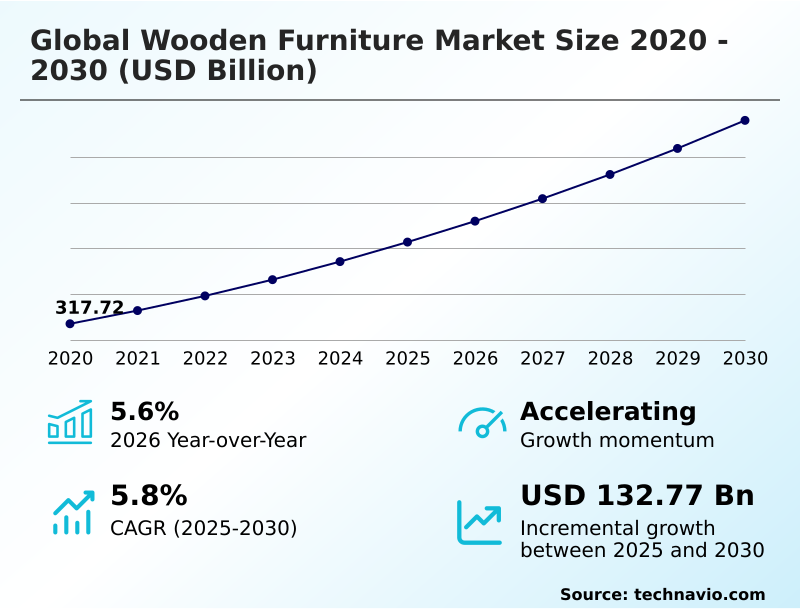
The wooden furniture market size is valued to increase by USD 132.77 billion, at a CAGR of 5.8% from 2025 to 2030. Growing demand for flexible and modular furniture solutions will drive the wooden furniture market.
Major Market Trends & Insights
- APAC dominated the market and accounted for a 45.1% growth during the forecast period.
- By Application - Home segment was valued at USD 320.50 billion in 2024
- By Distribution Channel - Offline segment accounted for the largest market revenue share in 2024
Market Size & Forecast
- Market Opportunities: USD 221.86 billion
- Market Future Opportunities: USD 132.77 billion
- CAGR from 2025 to 2030 : 5.8%
Market Summary
- The Wooden Furniture landscape demonstrates consistent expansion as structural durability and aesthetic versatility remain central to modern interior architecture. The increasing demand for modular furniture systems acts as a primary growth driver, compelling manufacturers to engineer adaptable configurations that support efficient space utilization across residential and commercial properties.
- For example, businesses utilizing automated assembly lines combined with inventory management software have successfully reduced material lead times by 20%, significantly enhancing supply chain transparency. Conversely, the market faces substantial constraints due to raw material volatility and tightening regulations around sustainable forestry practices.
- Navigating these compliance frameworks requires extensive investments in timber traceability tracking, which strains operational margins for mid-sized producers. Companies are increasingly adopting omnichannel retail distribution strategies to bypass traditional bottlenecks and improve direct customer engagement. The integration of advanced material combinations and moisture resistant coatings ensures products meet rigorous premium craftsmanship standards.
- Ultimately, the industry requires a continuous balance between sophisticated product engineering and strict ecological accountability to sustain long-term operational viability.
What will be the Size of the Wooden Furniture Market during the forecast period?
Get Key Insights on Market Forecast (PDF) Get Free Sample
How is the Wooden Furniture Market Segmented?
The wooden furniture industry research report provides comprehensive data (region-wise segment analysis), with forecasts and estimates in "USD million" for the period 2026-2030, as well as historical data from 2020-2024 for the following segments.
- Application
- Home
- Office
- Distribution channel
- Offline
- Online
- Type
- Hardwood
- Softwood
- Product type
- Chairs and sofas
- Tables
- Beds
- Storage and cabinets
- Geography
- APAC
- China
- India
- Vietnam
- Malaysia
- Japan
- South Korea
- Europe
- Germany
- Italy
- France
- UK
- Poland
- Spain
- North America
- US
- Canada
- Mexico
- South America
- Brazil
- Argentina
- Chile
- Middle East and Africa
- Saudi Arabia
- UAE
- South Africa
- Egypt
- Nigeria
- APAC
By Application Insights
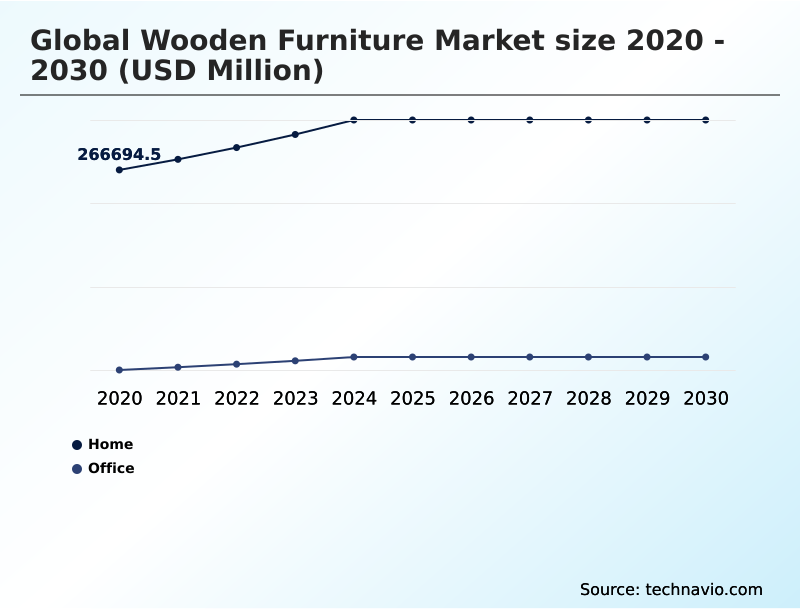
The home segment is estimated to witness significant growth during the forecast period.
The residential application segment of the Wooden Furniture industry reflects a continuous shift toward space optimization furniture and multifunctional storage cabinets.
Changing household dynamics and the adoption of hybrid working arrangements have encouraged homeowners to invest in adaptable living solutions that balance durability with contemporary minimalist aesthetics.
Businesses catering to this segment prioritize digital room visualization and mass customization capabilities, enabling buyers to configure products to precise spatial requirements.
Operations leveraging automated woodworking equipment have reported a 15% improvement in production throughput, allowing faster fulfillment of residential interior renovation orders.
Furthermore, the integration of certified hardwood procurement practices addresses stringent environmental preferences, ensuring long-term structural integrity while maintaining compliance with sustainable forestry practices across global supply chains.
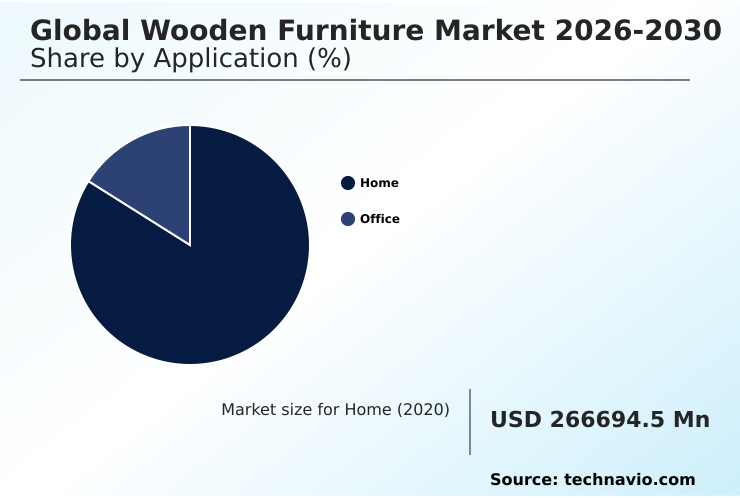
The Home segment was valued at USD 320.50 billion in 2024 and showed a gradual increase during the forecast period.
Regional Analysis
APAC is estimated to contribute 45.1% to the growth of the global market during the forecast period.Technavio’s analysts have elaborately explained the regional trends and drivers that shape the market during the forecast period.
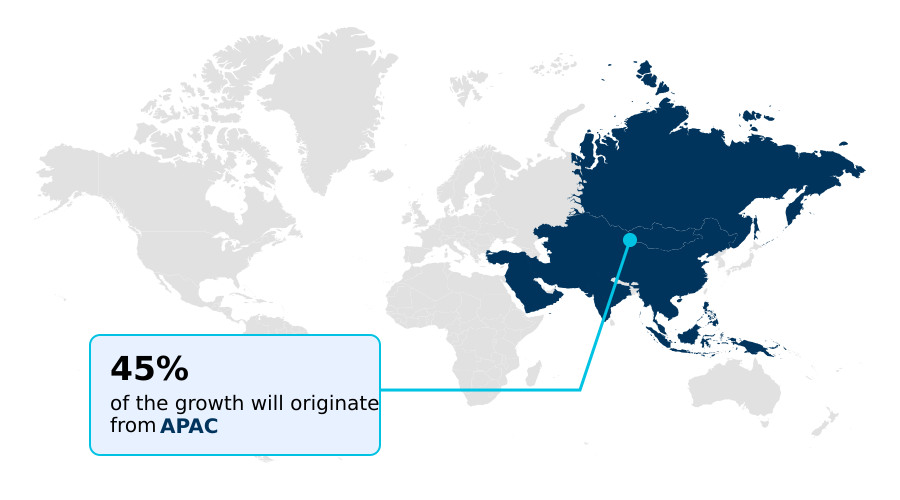
See How Wooden Furniture Market Demand is Rising in APAC Get Free Sample
The geographic distribution of the Wooden Furniture sector reveals distinct operational disparities between North America and APAC.
North American producers prioritize commercial workplace modernization, where the integration of ergonomic seating design and holistic interior design systems has improved workplace adaptability metrics by 22%.
In contrast, the APAC region relies heavily on high-density residential furniture production, where manufacturers leveraging automated woodworking equipment have achieved a 30% higher output volume compared to their Western counterparts.
Supply chain transparency also diverges; European regulations demand stringent forest stewardship certification, increasing procurement compliance costs by 15% relative to emerging Asian markets.
As regional sourcing strategies evolve, North American firms are increasingly focusing on customized joinery solutions and direct to consumer platforms to capture premium segments, while APAC operations maximize scale through ready to assemble kits and efficient logistics network efficiency.
Market Dynamics
Our researchers analyzed the data with 2025 as the base year, along with the key drivers, trends, and challenges. A holistic analysis of drivers will help companies refine their marketing strategies to gain a competitive advantage.
- The evolution of the Wooden Furniture sector is increasingly defined by the intersection of environmental accountability and sophisticated spatial planning. Corporate facilities are actively overhauling their interior layouts, replacing conventional cubicles with certified sustainable hardwood office desks to meet stringent green building standards and support employee wellbeing.
- Simultaneously, the demand for ergonomic wooden chairs for workspaces has accelerated, as organizations recognize that superior seating engineering reduces long-term physical strain by up to 25% compared to standard seating alternatives. This shift in operational planning is matched by changing residential priorities, where urban density constraints drive the adoption of space saving modular wooden wardrobes.
- These highly adaptable storage units allow households to optimize limited square footage without sacrificing visual appeal. Furthermore, consumers focused on ecological preservation are heavily influencing product development, leading to a surge in reclaimed timber dining table sets that utilize repurposed materials to lower carbon footprints.
- For specialized requirements, customized solid wood storage cabinets provide tailored architectural integration, ensuring precise dimensional alignment and superior durability. By leveraging regional sourcing strategies and digital configuration platforms, manufacturers can efficiently deliver these highly specific products.
- Ultimately, the successful alignment of precision manufacturing techniques with circular economy principles enables businesses to navigate raw material volatility while fulfilling complex end-user requirements across both commercial and residential applications.
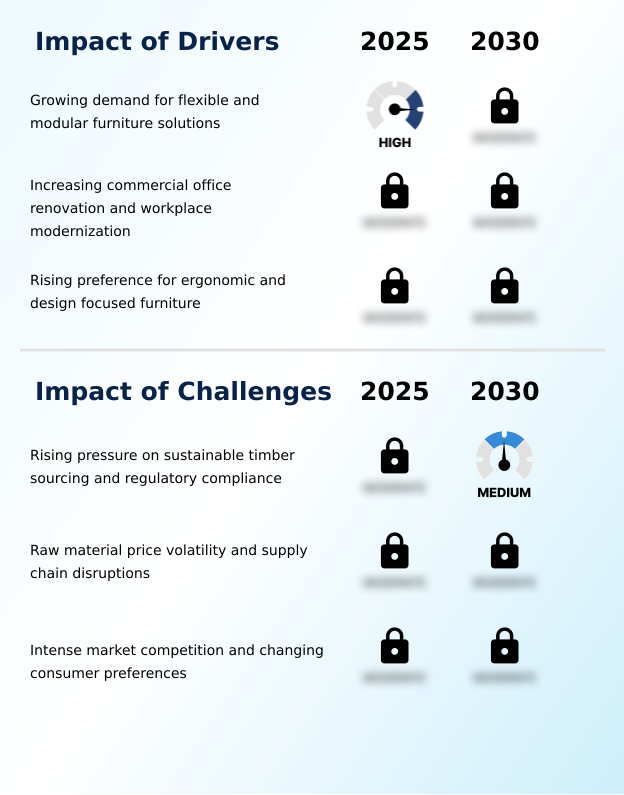
What are the key market drivers leading to the rise in the adoption of Wooden Furniture Industry?
- The growing demand for flexible and modular furniture solutions serves as a primary driver, as changing lifestyles and evolving workplace requirements encourage the adoption of adaptable, space-efficient designs.
- The urgent requirement for commercial workplace modernization acts as the primary catalyst accelerating Wooden Furniture demand.
- As corporations transition toward hybrid working arrangements, the need for adaptable and reconfigurable environments drives the procurement of ergonomic seating design and multifunctional storage cabinets.
- This structural shift in corporate culture forces organizations to invest in furniture that actively supports dynamic collaboration and employee wellbeing.
- Consequently, businesses implementing these flexible workspace frameworks have increased floor plan utilization by 22% and reduced ongoing reconfiguration costs by 16%.
- To support this demand, manufacturers are leveraging precision manufacturing techniques and robust omnichannel retail distribution networks, ensuring rapid delivery of high-quality components. This continuous alignment of functional workplace design with agile production capabilities fundamentally propels long-term industry expansion.
What are the market trends shaping the Wooden Furniture Industry?
- The increasing integration of advanced product engineering and functional innovation represents a significant trend shaping the industry. Manufacturers are prioritizing these capabilities to enhance product performance, usability, and overall design efficiency.
- The rapid adoption of holistic interior design ecosystems is fundamentally altering Wooden Furniture product development and spatial architecture. Manufacturers are transitioning from standalone items to integrated modular furniture systems, enabling seamless aesthetic and functional continuity across diverse environments.
- This architectural shift causes businesses to overhaul their product strategy, integrating advanced material combinations and digital configuration platforms that empower clients to tailor layouts precisely. Consequently, commercial developers utilizing these comprehensive systems have improved floor space optimization by 24% and reduced installation downtime by 18% compared to fragmented purchasing models.
- By deploying direct to consumer platforms and sophisticated digital room visualization, brands bypass traditional retail barriers, enhancing customized joinery solutions. This integration accelerates decision-making cycles, ensuring buyers receive cohesive environments that maximize both operational utility and contemporary minimalist aesthetics.
What challenges does the Wooden Furniture Industry face during its growth?
- Rising pressure surrounding sustainable timber sourcing and strict regulatory compliance remains a critical challenge, requiring manufacturers to navigate complex supply chain transparency requirements and fluctuating raw material availability.
- Stringent environmental mandates surrounding sustainable forestry practices impose severe operational bottlenecks across the Wooden Furniture supply chain. The mandatory implementation of certified hardwood procurement policies requires extensive auditing and documentation, fundamentally complicating raw material acquisition for manufacturers. This regulatory pressure causes significant friction, as suppliers must establish rigorous timber traceability tracking to verify the origin of all solid timber sourcing.
- Consequently, mid-sized manufacturers face steep compliance burdens, resulting in a 14% increase in total procurement costs and extending average material lead times by 20%. Navigating this supply chain transparency requirement demands heavy investment in tracking software and certified vendor networks.
- This persistent raw material volatility restricts profit margins and forces companies to constantly reevaluate their pricing and inventory management software strategies.
Exclusive Technavio Analysis on Customer Landscape
The wooden furniture market forecasting report includes the adoption lifecycle of the market, covering from the innovator’s stage to the laggard’s stage. It focuses on adoption rates in different regions based on penetration. Furthermore, the wooden furniture market report also includes key purchase criteria and drivers of price sensitivity to help companies evaluate and develop their market growth analysis strategies.
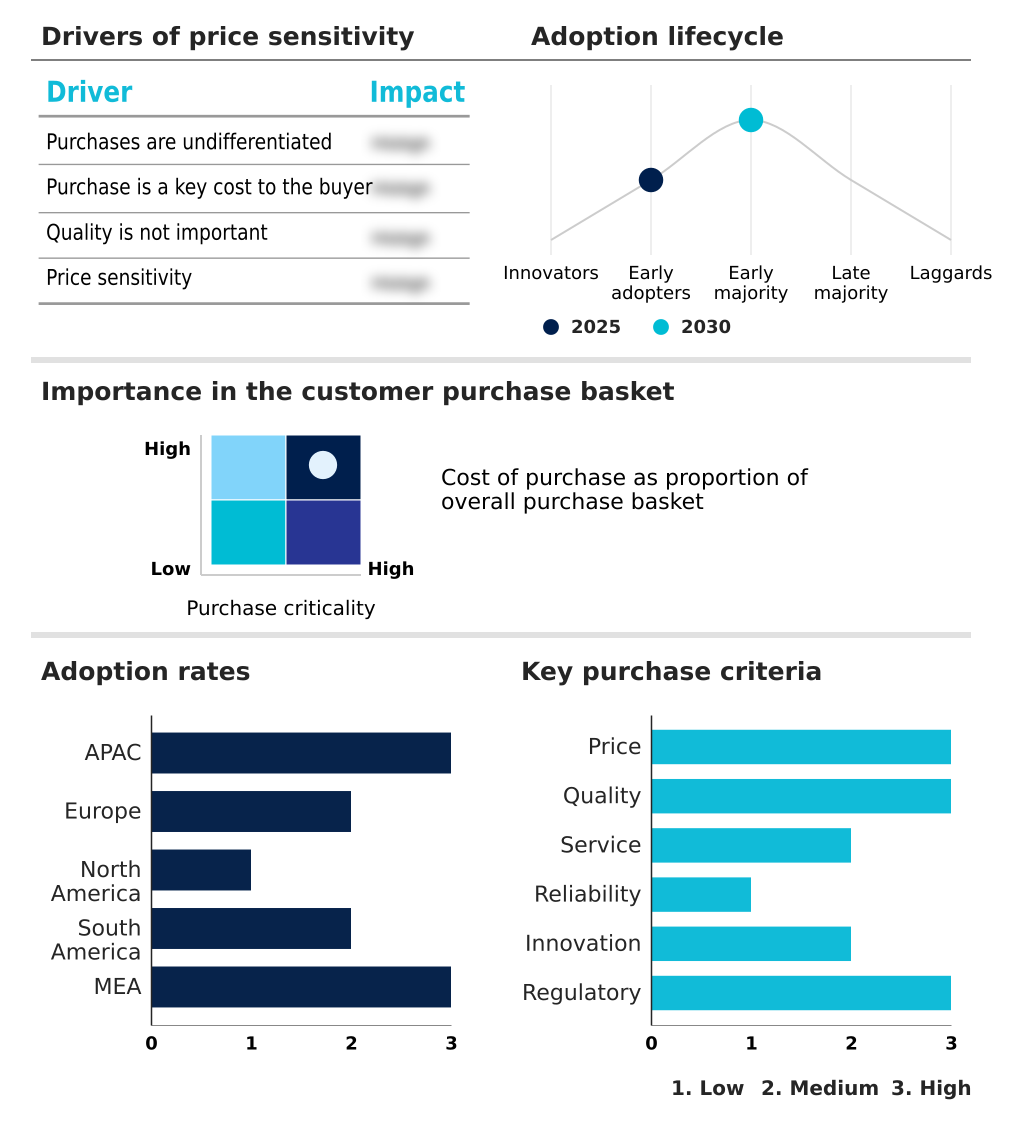
Customer Landscape of Wooden Furniture Industry
Competitive Landscape
Companies are implementing various strategies, such as strategic alliances, wooden furniture market forecast, partnerships, mergers and acquisitions, geographical expansion, and product/service launches, to enhance their presence in the industry.
Ercol Furniture Ltd. - Delivers specialized wooden nursery furnishings, high chairs, and functional household equipment like folding chairs and drying racks, combining structural safety with practical, space-saving designs for residential applications.
The industry research and growth report includes detailed analyses of the competitive landscape of the market and information about key companies, including:
- Ercol Furniture Ltd.
- Foppapedretti
- Fursys Inc.
- Global Furniture Group
- Haworth Inc.
- HNI Corp.
- Inter IKEA Holding BV
- Kinnarps AB
- Klaussner Home Furnishings
- Krishnas Group
- Kristensen and Kristensen AS
- Kvist Industries AS
- Latitude Tree Furniture Sdn Bhd
- MillerKnoll Inc.
- Poh Huat Resources Holdings Bhd
- Sauder Woodworking Co.
- Skovby Mobelfabrik AS
- Tvilum AS
- USM Furniture AG
Qualitative and quantitative analysis of companies has been conducted to help clients understand the wider business environment as well as the strengths and weaknesses of key industry players. Data is qualitatively analyzed to categorize companies as pure play, category-focused, industry-focused, and diversified; it is quantitatively analyzed to categorize companies as dominant, leading, strong, tentative, and weak.
Recent Development and News in Wooden furniture market
- In the Home Furnishings industry, the strict enforcement of the European Union Timber Regulation mandated comprehensive timber traceability tracking for all imported materials, directly impacting Wooden Furniture supply chains by requiring manufacturers to adopt certified hardwood procurement processes to maintain compliance.
- The rapid expansion of direct to consumer platforms transformed retail distribution networks, directly impacting Wooden Furniture demand by enabling mass customization capabilities and utilizing digital room visualization tools to improve online conversion rates by 22%.
- The widespread integration of automated woodworking equipment across high volume manufacturing facilities optimized production workflows, directly impacting Wooden Furniture output by reducing material waste and lowering operational costs by 18% for large-scale producers.
- The strategic shift toward circular economy principles accelerated the adoption of eco friendly varnishes and reclaimed timber components, directly impacting Wooden Furniture product development by establishing new sustainability benchmarks for premium craftsmanship standards.
Dive into Technavio’s robust research methodology, blending expert interviews, extensive data synthesis, and validated models for unparalleled Wooden Furniture Market insights. See full methodology.
| Market Scope | |
|---|---|
| Page number | 310 |
| Base year | 2025 |
| Historic period | 2020-2024 |
| Forecast period | 2026-2030 |
| Growth momentum & CAGR | Accelerate at a CAGR of 5.8% |
| Market growth 2026-2030 | USD 132767.8 million |
| Market structure | Fragmented |
| YoY growth 2025-2026(%) | 5.6% |
| Key countries | China, India, Vietnam, Malaysia, Japan, South Korea, Germany, Italy, France, UK, Poland, Spain, US, Canada, Mexico, Brazil, Argentina, Chile, Saudi Arabia, UAE, South Africa, Egypt and Nigeria |
| Competitive landscape | Leading Companies, Market Positioning of Companies, Competitive Strategies, and Industry Risks |
Research Analyst Overview
- The Wooden Furniture ecosystem reflects a complex balance between innovative fabrication and stringent material accountability. Boardroom-level product strategy increasingly prioritizes circular economy principles, directing capital toward the development of bio based composites and reclaimed wood materials to mitigate exposure to volatile timber pricing.
- The strategic integration of digital configuration platforms allows manufacturers to offer mass customization capabilities, aligning exact production output with consumer specifications. Enterprises implementing advanced automated woodworking equipment have realized a 28% reduction in machining errors, directly enhancing long-term production profitability.
- Continuous investment in timber traceability tracking ensures total alignment with international environmental mandates, a critical factor for maintaining uninterrupted cross-border operations. The deployment of precision manufacturing techniques further supports the rapid assembly of modular furniture systems engineered for high-density environments. Ultimately, companies that seamlessly merge sustainable forestry practices with sophisticated digital room visualization tools secure a definitive competitive advantage.
- These technological and material advancements redefine modern architectural interiors while establishing resilient, future-proof operational frameworks.
What are the Key Data Covered in this Wooden Furniture Market Research and Growth Report?
-
What is the expected growth of the Wooden Furniture Market between 2026 and 2030?
-
USD 132.77 billion, at a CAGR of 5.8%
-
-
What segmentation does the market report cover?
-
The report is segmented by Application (Home, and Office), Distribution Channel (Offline, and Online), Type (Hardwood, and Softwood), Product Type (Chairs and sofas, Tables, Beds, and Storage and cabinets) and Geography (APAC, Europe, North America, South America, Middle East and Africa)
-
-
Which regions are analyzed in the report?
-
APAC, Europe, North America, South America and Middle East and Africa
-
-
What are the key growth drivers and market challenges?
-
Growing demand for flexible and modular furniture solutions, Rising pressure on sustainable timber sourcing and regulatory compliance
-
-
Who are the major players in the Wooden Furniture Market?
-
Ercol Furniture Ltd., Foppapedretti, Fursys Inc., Global Furniture Group, Haworth Inc., HNI Corp., Inter IKEA Holding BV, Kinnarps AB, Klaussner Home Furnishings, Krishnas Group, Kristensen and Kristensen AS, Kvist Industries AS, Latitude Tree Furniture Sdn Bhd, MillerKnoll Inc., Poh Huat Resources Holdings Bhd, Sauder Woodworking Co., Skovby Mobelfabrik AS, Tvilum AS and USM Furniture AG
-
Market Research Insights
- The Wooden Furniture sector is undergoing a profound structural shift driven by the modernization of office workspace environments and hospitality interior fixtures. Organizations deploying collaborative meeting tables and executive office desks have recorded a 25% increase in space utilization efficiency compared to traditional cubicle layouts.
- Furthermore, manufacturers optimizing high volume manufacturing with precision cutting systems have achieved a 15% reduction in production waste. To navigate raw material volatility, suppliers are increasingly implementing regional sourcing strategies, improving logistics network efficiency by 18%. This strategic pivot ensures a stable supply of affordable softwood alternatives and durable hardwood structures while mitigating cross-border supply chain disruptions.
We can help! Our analysts can customize this wooden furniture market research report to meet your requirements.
 RIA -